-36x36.jpg)


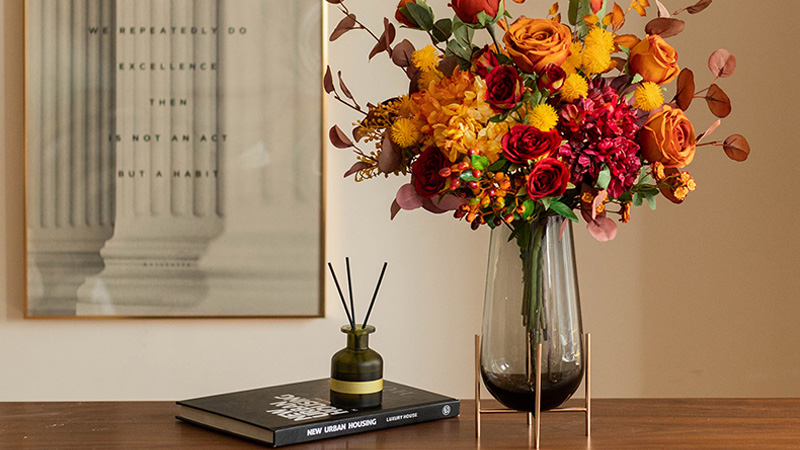
Preserved flowers are real botanical materials that have been treated and dried so they can be displayed without water. They are not the same as air-dried flowers or artificial flowers. Their color, texture and usable display life vary with the flower, preservation method, storage environment and handling.
This guide explains how preserved flowers differ from other decorative flowers, how to care for them, and how to choose a format that fits a gift or room. If you are comparing specific arrangements, browse FLOWEROF's preserved flower collection or eternal rose collection.
What are preserved flowers?
Preserved flowers begin as natural flowers or foliage. A maker removes moisture and may use a treatment that helps the material keep more of its original shape or flexibility. There is no single process used for every preserved flower. Commercial producers may combine dehydration, conditioning, color treatment or other proprietary steps, while home preservation commonly uses air drying, desiccants such as silica gel, pressing or glycerin for suitable foliage.
The University of Missouri Extension's flower-drying guide explains that silica gel can dry flowers quickly while supporting their natural form, and that glycerin can keep suitable leaves and stems more pliable. These methods demonstrate why the final result depends on both the plant material and the process.
Preserved vs dried vs artificial flowers
| Type | Starting material | Typical appearance | Water needed? | Best suited to |
|---|---|---|---|---|
| Preserved | Real flowers or foliage | Often softer and closer to the original form | No | Indoor gifts and decorative displays |
| Dried | Real flowers or foliage | Usually crisp, muted and more brittle | No | Rustic arrangements and craft projects |
| Artificial | Fabric, plastic or other manufactured material | Varies widely by material and construction | No | Reusable d茅cor where botanical material is not required |
For a closer side-by-side explanation, read preserved flowers vs dried flowers.
How long do preserved flowers last?
There is no responsible universal number. A flower's condition changes according to the species, treatment, dyes or finishes, enclosure, light exposure, humidity and handling. A protected indoor arrangement may retain an attractive appearance longer than the same material placed near a sunny window or in a damp bathroom, but every arrangement will age differently.
Rather than treating a lifespan estimate as a guarantee, check the specific product description and care instructions. Our preserved flower lifespan and care guide explains the factors that matter and the signs to watch for.
How to care for preserved flowers
- Do not water them. Preserved and dried botanical material is intended for dry display. Water, mist and liquid cleaners can mark petals or disturb dyes and finishes.
- Keep them away from direct sunlight. Light exposure can fade many colored organic materials. Smithsonian conservation resources note that light can cause fading and other deterioration, and that both intensity and duration matter.
- Avoid damp or steamy rooms. The Canadian Conservation Institute explains that damp conditions increase deterioration risks for organic materials. A normal, dry indoor room is a better location than a bathroom, windowsill or unconditioned storage area.
- Handle as little as practical. Lift an arrangement by its base or frame, not by petals or leaves. Dried and preserved plant material can become brittle over time.
- Remove dust gently. For an enclosed arrangement, dust the outside surface with a clean, soft cloth. For exposed flowers, use a very soft brush or low, cool air from a safe distance. Do not scrub petals.
These are general care principles, not conservation guarantees. Always follow any product-specific instructions supplied with your arrangement.
Open arrangement, acrylic box or framed display?
Open arrangement
An open arrangement offers a direct view of the flowers and works well where it will not be frequently touched. It also requires gentler dusting and a stable, dry display location.
Acrylic box or dome
An enclosure reduces direct handling and makes routine cleaning easier because you can dust the outer surface. Before buying, check the dimensions and confirm whether the enclosure is removable. See our acrylic rose box buying guide for the questions worth asking.
Framed preserved flowers
A frame turns flowers into wall or shelf d茅cor and can support personalization. Confirm the requested number, color, name or message before checkout, and check the final product dimensions. FLOWEROF's custom preserved flower gifts show the available display formats.
How to choose a preserved flower gift
Start with the recipient and the intended display space, not a generic 鈥渂est鈥?label.
- For an anniversary: choose a color and shape with a clear personal connection, then check that the recipient has a suitable indoor display location.
- For a birthday: a personalized number or message can make the gift more specific, but spelling and numeric details should be reviewed carefully before ordering.
- For remembrance: use restrained colors and a clearly reviewed name, date or message. Read the memorial frame ordering guide before submitting personalization.
- For home d茅cor: measure the shelf, table or wall area first. Product photos can make an arrangement look larger or smaller than it is.
Also review delivery information, the FAQ and the product's customization fields before checkout. If a product detail is unclear, contact FLOWEROF before placing the order.
Common buying mistakes
- Assuming every product uses the same preservation method or has the same display life.
- Buying from photos without checking dimensions, enclosure material or color options.
- Placing the arrangement in direct sun, near a heat source or in a humid room.
- Using water or household cleaning sprays on botanical material.
- Submitting personalized text without reviewing spelling, dates and numbers.
Frequently asked questions
Are preserved flowers real?
Yes. Preserved flowers start as real botanical material. They are treated and dried for decorative display and should not be confused with artificial flowers made from fabric or plastic.
Do preserved flowers need water?
No. Do not place them in water or mist them. Keep them in a dry indoor environment and follow the instructions for the specific product.
Can preserved flowers go in direct sunlight?
Direct sunlight is not recommended because light exposure can fade colored organic material. Choose a shaded indoor position away from a sunny window.
Are preserved flowers the same as dried flowers?
No. Both begin as real botanical material, but preserved flowers are generally processed to retain more flexibility and original form, while conventionally dried flowers are usually crisper and more brittle. Exact results depend on the method and species.
Can I preserve my own bouquet at home?
Some flowers can be air-dried, pressed or dried in silica gel. Results vary by flower and technique. The University of Missouri Extension provides method-specific instructions and safety considerations for home flower drying.
Sources and further reading
- University of Missouri Extension: Drying Flowers and Foliage for Arrangements
- Smithsonian Institution Archives: Environment and light-related deterioration
- Canadian Conservation Institute: Incorrect Relative Humidity
Last reviewed: August 28, 2026. Product construction and care instructions can differ; check the individual product page before ordering.
 Custom image caption
 Custom image caption
 Custom image caption
 Video support
 Banners with links
 Custom image caption
 Custom image caption
 Custom image caption
 Custom image caption
 Custom image caption
 Custom image caption
 Custom image caption
 Custom image caption
 Custom image caption
 Custom image caption
 Image caption
 Banner Link
 Banner Link
 Banner Link
Banner Link
Banner Link
Banner Link
Banner Link
Leave a comment