-36x36.jpg)



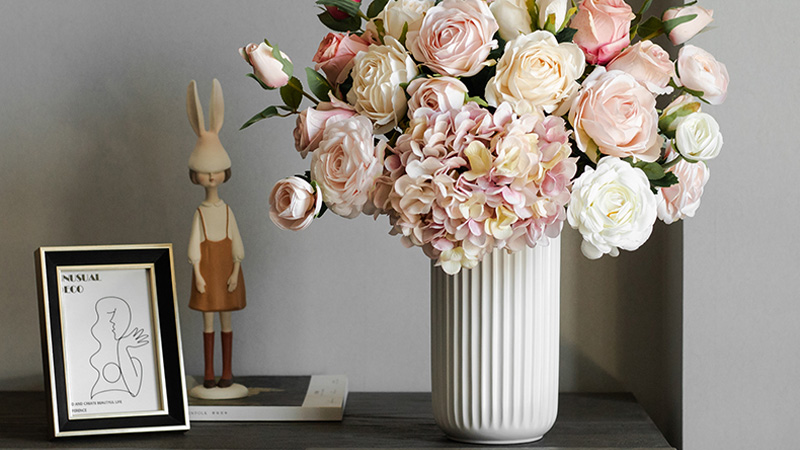
In current flower retailing, “eternal roses,” “eternity roses” and “forever roses” are often different names for a similar idea: roses prepared for longer indoor display than a fresh-cut bouquet. The words are not enough to tell you whether a product uses real preserved roses, dried flowers, artificial flowers or another construction. They also do not guarantee a particular process or number of years.
The useful question is not which name sounds longest. It is what the seller can verify about the exact arrangement: flower type, treatment, colors, dimensions, enclosure, care, expected changes and any written warranty.
Fact checked: 21 August 2026. This guide separates observed retail terminology from verified horticultural and product facts.
Quick comparison of the common names
| Label | What sellers often mean | What the label does not prove |
|---|---|---|
| Preserved roses | Real roses treated for decorative display without routine watering. | The exact treatment, softness, dye, scent, display life or warranty. |
| Eternal roses | A retail name that emphasizes longer display and gift value. | That the roses are real, professionally preserved or literally permanent. |
| Eternity roses | Another retail or brand-style name used for long-lasting rose arrangements. | A separate botanical variety, standard process or guaranteed quality grade. |
| Forever roses | A memorable description for roses intended to outlast fresh-cut flowers. | That color, texture and shape will never change. |
| Infinity roses | A less common variation on the same longevity theme. | Any particular material, origin, process or lifespan. |
A current retailer FAQ provides a useful example of market usage by listing eternal, eternity, forever, infinity and preserved roses among the names shoppers may encounter. That page describes its own products, not an industry-wide standard. Treat it as evidence of terminology in the market, not proof that every seller uses the words correctly.
Why the names overlap
Retail names are designed to communicate an outcome quickly. “Eternal,” “eternity” and “forever” all suggest a gift that remains visible after an occasion. Different sellers may choose one term for brand positioning, search visibility or the emotional tone of a collection.
Preservation methods are more complicated than the name. Air drying removes moisture and usually leaves a crisp texture. Silica gel also removes moisture but supports the flower as it dries. Glycerin treatment can replace water in some plant tissue. The Royal Horticultural Society describes air drying, silica gel, glycerine and pressing as distinct techniques. It does not present them as interchangeable outcomes.
Plant material also responds differently. Mississippi State University Extension explains that glycerin is generally better suited to mature foliage than soft flower petals. That is one reason a vague claim such as “glycerin preserved roses” should not be applied to every product without supplier or production evidence.
Are eternal and eternity roses real?
They can be, but the label alone is not proof. A clear product description should say whether the display contains real preserved flowers. Look for close product images, botanical variation between blooms and care instructions that match preserved plant material.
Do not rely on appearance alone. Artificial petals can be realistic, dried roses can retain a rounded form when silica is used, and preserved flowers may be dyed in colors that do not occur naturally. A glass dome or acrylic box is a display format, not evidence of what is inside.
FLOWEROF identifies its current rose arrangements as real preserved roses. For example, the preserved rose swan is offered in White Swan, Colorful Swan and Black Swan styles inside a clear acrylic display. The product page should remain the source for its verified options and care.
Does “forever” mean the roses never change?
No natural flower remains unchanged forever. Color, texture and structure can change with light, humidity, temperature and handling. A case reduces dust and routine touching, but it does not make botanical material immune to its environment.
A seller may provide an estimated display range or a product-specific warranty. Those are different things. An estimate describes a common planning expectation. A warranty should state what is covered, for how long and what remedy is available.
The Federal Trade Commission's advertising guide for small businesses explains that objective advertising claims need a reasonable basis. Applied here, a precise lifespan, preservation process or performance guarantee should be supported for the product making that claim. A broad retail name is not evidence.
For a fuller discussion of changing appearance and indoor conditions, read our preserved flower lifespan and care guide.
What to verify before buying
1. Flower material
Check whether the product contains real preserved roses, dried roses, artificial flowers or a mixture. If the description only says “eternal,” ask for clarification.
2. Exact process
A seller should describe a process only when it knows the production method. “Preserved” is useful, but claims about glycerin, freeze-drying, cell replacement, hand treatment or country-specific technology need product records.
3. Actual color options
Look at the image tied to each selectable option. Preserved roses may be recolored, and the option name should match the photographed palette. FLOWEROF's two current heart designs illustrate why this matters: the colorful preserved rose heart offers rainbow, white and lavender directions, while the romantic preserved rose heart focuses on pink and red palettes.
4. Dimensions and display format
Confirm the complete width, depth and height rather than relying on a close photograph. Check whether the clear cover is removable, whether the item is designed for a shelf or wall and which parts are included.
5. Scent
Do not assume a preserved rose keeps its original fresh fragrance. If a scent is added, the seller should say so. Shoppers who are sensitive to fragrance should ask before ordering.
6. Care instructions
Real preserved roses generally should not be watered. The product should also explain suitable light, humidity, temperature and handling. Compare preserved and dried materials in our preserved flowers vs dried flowers guide.
7. Lifespan wording
Ask whether the stated period is an estimate, a tested result or a written warranty. Check the conditions and exclusions. Avoid treating “forever” as a measurable promise.
8. Ordering and support terms
Review the live price, stock, delivery policy, returns and contact method. A product name should not be used as evidence of free shipping, damage protection or return eligibility.
How to compare two rose gifts fairly
Use the same facts for both products. This prevents an emotional name from outweighing practical differences.
- Real, preserved, dried or artificial material
- Verified width, depth and height
- Number and names of selectable styles
- Open arrangement, acrylic box, frame or dome
- Water, sunlight, humidity and handling guidance
- Estimate versus written warranty
- Current price and stock
- Delivery, damage and return terms
Browse the eternal rose gift collection using these criteria. The best choice is the product whose verified design, scale and care requirements fit the recipient, not the one with the most absolute name.
Frequently asked questions
Are eternal roses and eternity roses different products?
Not necessarily. Current retailers often use the terms for similar preserved rose products. A specific seller may define a collection differently, so compare the listed material, process, dimensions, options and care.
Are forever roses artificial?
Some are real preserved roses and some products using similar language may be artificial. The phrase alone does not identify the material. Check the exact product description.
Do eternal roses need water?
Real preserved roses are normally displayed without water. Water or mist can damage petals, dyes, adhesives or the base. Follow the maker's instructions for the exact product.
Are eternity roses the same as dried roses?
Not always. Commercially preserved roses often aim to retain a softer, fuller appearance, while air-dried flowers usually feel crisp. Silica-dried and freeze-dried flowers can also keep substantial shape, so ask about the actual method.
How long do eternal roses last?
There is no universal result. The flower, treatment, light, humidity, temperature, handling and acceptable appearance all matter. Treat any period as product-specific and check whether it is an estimate or warranty.
Which phrase should I search when shopping?
Try preserved roses, eternal roses and eternity roses, then compare the product facts rather than assuming each search term represents a different quality tier.
Sources and editorial notes
- Royal Horticultural Society: How to dry flowers and foliage
- Mississippi State University Extension: Glycerin-Preserved Foliage
- Federal Trade Commission: Advertising FAQs for small businesses
- Retail terminology example: Eternal Roses FAQ
The retailer source is included only to document current market terminology. It is not used as independent proof of a preservation process, lifespan or quality standard. FLOWEROF product facts must come from the catalog, supplier records and visible product options.
 Custom image caption
 Custom image caption
 Custom image caption
 Video support
 Banners with links
 Custom image caption
 Custom image caption
 Custom image caption
 Custom image caption
 Custom image caption
 Custom image caption
 Custom image caption
 Custom image caption
 Custom image caption
 Custom image caption
 Image caption
 Banner Link
 Banner Link
 Banner Link
Banner Link
Banner Link
Banner Link
Banner Link
Leave a comment