-36x36.jpg)



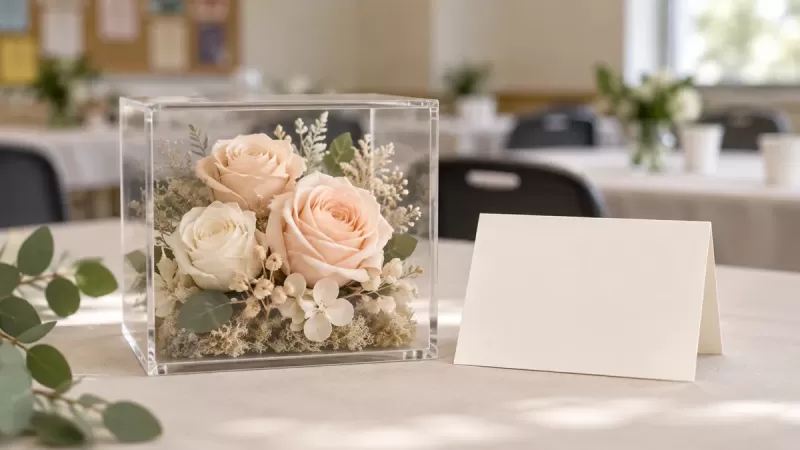
Would a preserved-flower display make a good thank-you for a community volunteer? Sometimes—but begin with the person and the organization, not a shopping list. Tell the volunteer what their contribution changed. Then check whether an individual gift is welcome, allowed, affordable for the group, and convenient to receive. A note alone may be the better choice. This guide concerns a volunteer who helped with a community event or project; it is not advice on paying staff, rewarding hours, or selecting an employer's promotional gifts.
Start with a specific thank-you
Name the task the person chose to do and the difference it made. “Thank you for greeting first-time visitors and helping them find the right table” is more useful than a generic certificate. If you cannot describe their contribution accurately, ask the project coordinator before writing. The Volunteer Canada recognition study found that volunteers valued hearing how their work made a difference and receiving informal personal thanks. That finding supports starting with recognition; it does not prove that a flower display suits every volunteer.
Ask who is giving and who is receiving
Is this a private thank-you from someone the volunteer helped, a team-funded gesture, or a gift bought with an organization's money? Those are different situations. A personal note can be shared without implying that the organization endorses a purchase. When funds or an official presentation are involved, ask the coordinator who can approve the budget and whether gifts are part of its recognition policy. Avoid making a volunteer feel that they must accept a product or display it publicly to show loyalty to the cause.
Check the organization's gift boundaries
The National Council for Voluntary Organisations guidance on thanking volunteers says words can be the simplest form of thanks, notes that a gift may suit some milestones, and advises checking the organization's own gift and funds policy. It also discusses legal and financial considerations in its UK context. Do not transfer those UK rules to another country or infer that a specific dollar amount is permitted. Ask the actual organization before using shared funds or offering anything valuable.
Do not overlook the rest of the team
If several people staffed the same event, an individual gift can unintentionally overlook others. Consider whether the fairer action is a sincere note to each person, a group message with their permission, or a shared celebration. An individual display may be appropriate for a departing long-term volunteer, a person with a distinct contribution, or a close personal relationship, but explain the reason clearly and avoid presenting it as a ranking of volunteers. The gift should not replace everyday recognition of the whole team.
Check the recipient's taste and space
A preserved-flower arrangement is a decorative object that needs a place to live. Ask whether this volunteer enjoys flowers and has room for a display. A person who travels, shares a small home, or prefers not to keep ornaments may appreciate the card much more. Do not assume the organization can store the display, and do not treat the colors in the event branding as the recipient's favorite colors. If you cannot learn their preference discreetly, pause the purchase rather than giving them a storage problem.
Compare formats without guessing the product
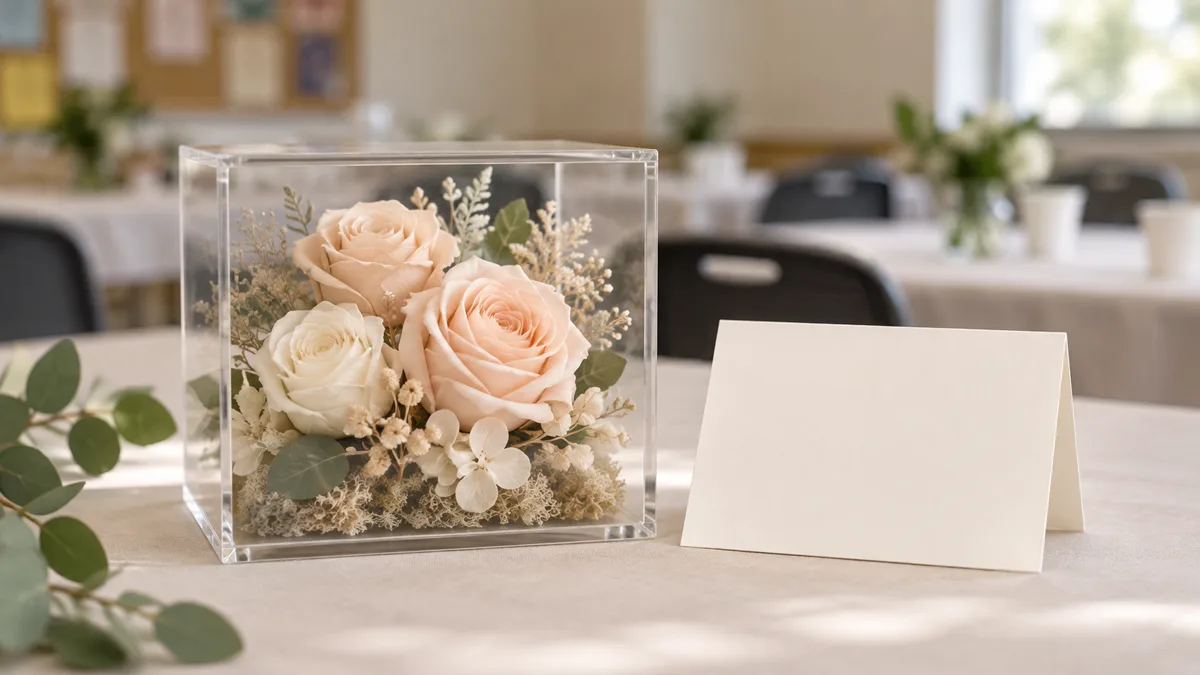
If a floral object is welcome, browse the current FLOWEROF preserved-flower collection and check the exact product's dimensions, materials, options, and available images. The bouquet-versus-acrylic-box guide is useful for thinking about enclosure and display space. Neither page can tell you the volunteer's personal preference. The photograph above is illustrative; it does not certify that this rose mix, box, card, or color is for sale.
Keep the message about service, not obligation
Write one or two truthful details in a removable card: what the volunteer did, why it helped, and a simple wish for their next chapter. Do not engrave a name, a photograph, an event result, or beneficiary information on an object without permission. Avoid language such as “you earned this” that makes a gift sound like pay for hours worked. The purpose is appreciation, not a new contract or an incentive to volunteer again. A card can stand alone even if you originally intended to buy flowers.
Plan a quiet, consent-based handoff
A busy event exit may be a poor time to hand someone a glass or acrylic display. Ask when they can receive it, whether they would rather avoid a public presentation, and whether they can carry it home. For an absent volunteer, confirm a suitable delivery address directly; do not ask the organization to share a private address without authorization. If timing is uncertain, send the words now and arrange a gift later. This also gives the person an easy way to say that a display would not fit their circumstances.
Read current order terms before a purchase
Check the selected item's live description, price, options, total and delivery estimate rather than relying on this article. The FTC online-shopping advice recommends reviewing descriptions and the terms for delivery and returns. For FLOWEROF, consult the current delivery information and terms and conditions. Ask FLOWEROF Contact Us about an unclear listing before ordering. This guide promises no stock level, delivery date, return eligibility, lifespan, or customization capability.
Choose another form of recognition when it fits
A volunteer may prefer to hear an outcome from the project, receive a personal letter, or simply be thanked without any item. Ask what would be meaningful instead of assuming that a purchased gift has higher value. If the organization has no gift budget or cannot accept donated goods, respect that. If the volunteer works in a shared office, a display could require approval there too; our separate office-desk placement guide helps with the physical-space question but does not override a workplace policy.
Use a simple decision checklist
- Identify the specific contribution you want to recognize.
- Confirm the giver, budget owner and applicable organizational gift policy.
- Ask whether this person wants a decorative flower object and has space for it.
- Check the exact product, current options and live terms if purchasing.
- Arrange a private handoff or recipient-approved delivery.
If any of these answers is missing, give an honest note and wait. That is a completed expression of thanks, not a failed gift plan. A flower display should be a welcome extra, never a burden or a substitute for fair treatment of volunteers.
Keep this intent separate from other gift guides
This page is for community volunteers and organization-level recognition boundaries. A teacher gift involves school-specific rules; a coworker promotion gift involves an employment relationship; a wedding officiant thank-you begins with a service arrangement. Borrowing those assumptions would make the volunteer decision worse. Use the live collection for transactional selection, this guide for the recipient-and-policy decision, and the relevant organization for its actual rules.
Frequently asked questions
Do volunteers expect a purchased thank-you gift?
Not as a universal rule. A specific personal thanks and a clear account of the difference they made can be enough. Ask about individual preferences before buying an object.
Can our organization use its budget for a flower gift?
Only the organization can answer that. Confirm its approval process and gift policy, especially if charitable or shared funds would be used.
Should we present a display publicly at the event?
Ask the volunteer first. A private handoff can respect their preference and avoid making them carry a delicate object during a busy event.
Could we personalize the gift with the volunteer's name?
Seek consent and verify the live product's actual customization options. A removable note is often easier to change and does not permanently label the display.
What if the volunteer declines a gift?
Thank them sincerely and respect the answer. Do not insist, substitute a more expensive item, or treat the refusal as a lack of appreciation.
Leave a comment