


A preserved-flower gift for a friend after separation is an option only when that friend wants a decorative keepsake. Ask about the object, message and delivery before ordering. Do not assume the occasion calls for congratulations, sympathy, a party or a fresh-start slogan. A private note or practical help they have requested may be a better choice than flowers.
This is a buying and handover checklist for a friend, not relationship counselling, legal advice or a guide to recovering from divorce. A flower display cannot resolve a separation or promise emotional improvement. The useful question is narrower: would this particular object be welcome in this person's life and home right now?
1. Let your friend name the occasion
Start with what the friend has actually told you. They may want ordinary company, a practical favour, a quiet acknowledgement or no discussion of the separation at all. Do not decide that a completed legal step must feel celebratory, or that someone who seems relieved wants a permanent reminder of the event. Their preferred response can differ from your own experience.
Relate's explanation of life after separation describes varied experiences and both practical and personal support needs. Gingerbread's separation information, written for single-parent families, also identifies several different practical issues rather than one universal next step. These independent organisations do not endorse this product or establish that buying flowers is helpful for everyone.
Our shopping recommendation is therefore to avoid assigning a meaning the recipient has not chosen. You can simply say that you are thinking of them. You do not need a decorative object to prove that you care.
2. Ask about a keepsake without requesting a personal account
A focused question is easier to answer than a request to explain the whole situation: "Would a small flower display be welcome, or would you rather I just send a note?" Make it clear that either answer is fine. If they have already named a practical need, do not replace that request with your preferred present and call it equivalent support.
Do not ask for details about a former partner, children, finances or living arrangements to justify the purchase. You only need information relevant to the gift: whether it is wanted, where it can be received and whether there is a suitable place for it. If your friend does not want to decide about an object now, pause rather than making acceptance another task.
A response such as "not now" is enough. Avoid repeated follow-up messages about colours, photos and packaging when the person has not agreed to a keepsake in the first place. Ordinary friendship can continue without turning this moment into a gift-selection project.
3. Separate decoration from practical support
Keep the purpose of your offer honest. A flower display is decoration. It is not a substitute for a requested lift, an agreed visit or another specific favour you have offered. If you can only send a card, say that plainly; there is no required spending level for showing friendship.
When a decorative gift is welcome, browse the preserved-flower collection with the recipient's preferences in mind. Do they like a lasting floral object, and would they choose that style for themselves? Avoid buying a conspicuously romantic design simply because roses are familiar. Colour and format are personal choices, not a code that determines how a separated person should feel.
Do not describe preserved flowers as a treatment, a confidence boost that is guaranteed to work, or proof that a new chapter has begun. The recipient is free to enjoy an ordinary attractive object without attaching a story to it.
4. Check the real display space, not an imagined new home
Do not assume your friend has moved, wants to move, or has space for additional possessions. Ask only whether a small display would fit somewhere they have chosen. If an address or room is temporary, a later gift may be more convenient than something that needs to be packed again.
For one contained example, inspect the current framed preserved-sunflower listing. Read the actual measurements and available floral options, and compare them with the intended shelf or table. The listing is not a separation-specific package and should not be represented as one.
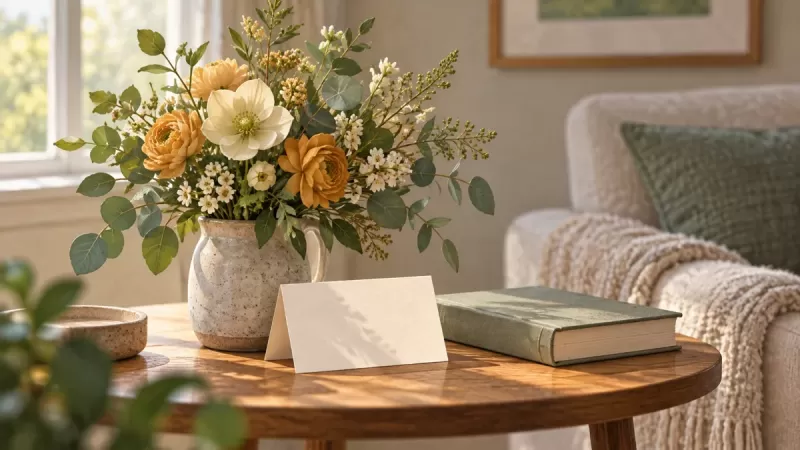
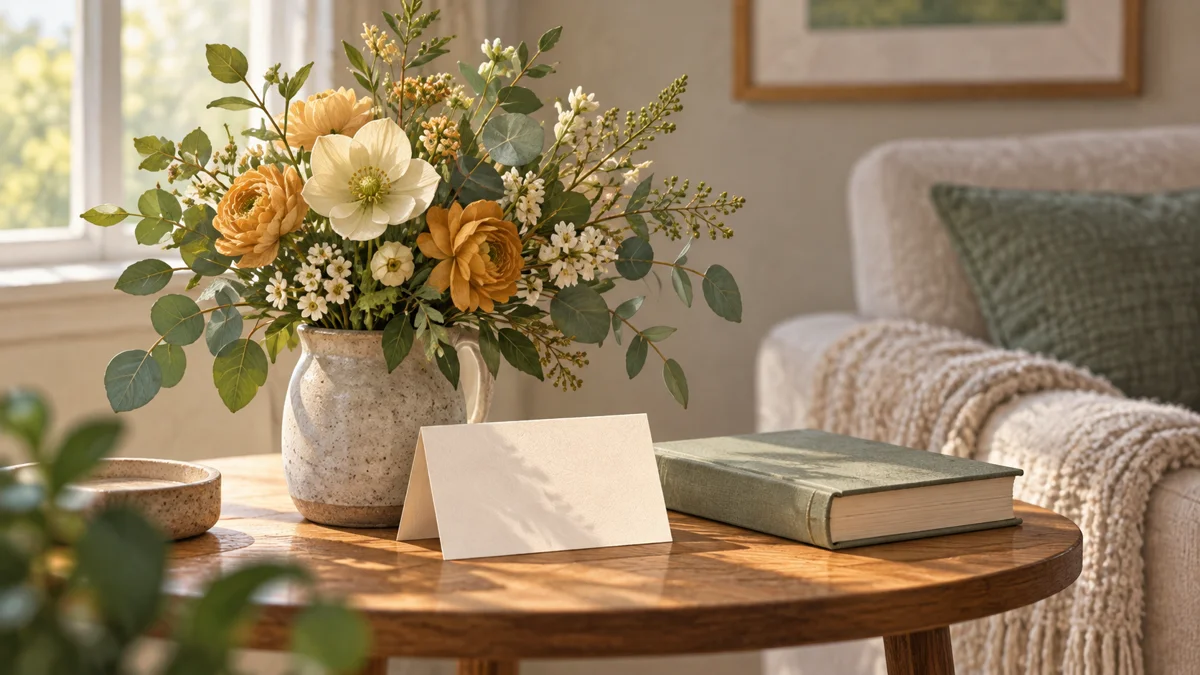
Check how the selected item is intended to stand or be displayed. Do not infer that a photographed prop, separate card, gift wrapping or mounting accessory is included. Confirm unclear details with the seller before buying. The illustration in this article is a concept, not evidence of the product's dimensions or contents.
5. Keep the message neutral unless invited otherwise
A short note could say: "Thinking of you. I saw this and thought you might enjoy it. No need to send a reply." Use your own familiar voice and only details you know are welcome. Avoid jokes about replacing a partner, demands to stay positive, or comments about who won or lost.
Do not add a date, name, quotation or photograph connected with the separation without permission. A message that feels supportive to the sender may be something the recipient does not want permanently displayed. A separate removable card leaves the meaning less fixed than an assumed personalised inscription.
Review the current purchase terms and ask about any requested personalisation before paying. This guide does not promise an engraving service, a custom card option or a right to return a specially altered item.
6. Agree delivery privately and make care straightforward
Ask which receiving address and timing are appropriate. Do not use an old shared address, a workplace or a relative's home merely because you already know it. A public handover can disclose circumstances the friend has not chosen to share. Arrange an ordinary private delivery or visit only when the recipient agrees.
Check the delivery information for the actual service details. Do not promise a particular arrival day from a general article, especially around a move or appointment. If receiving a parcel is inconvenient, defer the purchase instead of asking the friend to organise a workaround.
Give the care instructions that apply to the real item. The framed sunflower listing describes dry indoor display without watering; the preserved-flower care guide explains why conditions matter. Do not promise that a keepsake will last forever or call it maintenance-free. If household suitability is uncertain, choose another gesture rather than assuming a flower material or container is appropriate everywhere.
7. Use a final permission checklist
- The friend has said a decorative keepsake would be welcome.
- You have not substituted it for practical help they requested.
- The real dimensions and display arrangement suit a location they chose.
- The message does not impose celebration, blame, romance or publicity.
- The receiving address and timing are explicitly agreed.
- No reply, photograph or public acknowledgement is expected.
If any answer is uncertain, keep the note and wait on the object. Do not require your friend to display it when you visit, explain why it has been moved, or keep it indefinitely. Giving something does not transfer control over their home or their story to you.
After the handover, continue being the friend you already are. The purchase is one optional gesture, not a milestone you need them to report on. Let future conversations be about ordinary shared interests as well as anything they choose to discuss.
8. Frequently asked questions
Should divorce flowers say congratulations?
Only if your friend has clearly welcomed that message. Otherwise choose neutral words in your own voice, or ask whether a note rather than a flower gift would be preferable.
Are preserved flowers better than practical help?
They serve different purposes. Decoration should not replace a particular favour the recipient has asked for. A keepsake is optional and only appropriate when wanted.
Can I send flowers to the old shared address?
Do not assume it is suitable. Confirm the receiving destination and timing directly and privately before ordering. If you cannot obtain that permission, wait.
Should I personalise the display with a separation date?
Not without explicit agreement. A removable separate card may be more appropriate than permanently attaching a meaning or date the recipient did not choose.
What if my friend declines the gift?
Accept the answer without asking for an explanation. A private note, ordinary company or specific help they welcome can express care without adding an object.
Leave a comment