


A preserved-flower gift for a new grandparent can be a personal congratulations present when the recipient actually wants a decorative keepsake. Ask before choosing a family title, arranging a surprise delivery, or adding a baby's name or photograph. The gift belongs to the grandparent's own home and preferences; it is not a nursery accessory, a promise of childcare, or a substitute for something the new parents have requested.
This guide is for someone congratulating a friend, neighbour, colleague or relative on becoming a grandparent. If your intended recipient is the baby's parent, choose a parent-focused gift instead. Start with a simple question: would they enjoy a small floral display, or would a warm message be more welcome?
1. Congratulate the person without assigning a new job
It is easy to write a card that assumes a grandparent will provide regular childcare. Avoid making that commitment on their behalf. Becoming a grandparent does not tell you their schedule, health, distance from the family, or wishes about involvement. Keep your congratulations separate from expectations about babysitting, visits or financial help.
The Raising Children Network guide to grandparent roles and boundaries encourages families to discuss what involvement suits them. The University of Arkansas Cooperative Extension article on grandparent relationships also describes different roles and ways families communicate across distance. These are family-relationship resources, not endorsements of a flower gift or instructions that every grandparent should follow the same role.
Our practical gifting suggestion is to celebrate the individual first. A short note about your friendship and their happy news can be enough. Do not turn a congratulations present into a public announcement of responsibilities.
2. Check whether the family news can be shared
Before ordering anything personalised, confirm that the recipient is comfortable with the news being acknowledged. Hearing an announcement privately does not give you permission to repeat it at work, post it online, or display a child's identifying details. You can ask about a present without requesting the baby's full name, date of birth, photograph or other private information.
For a colleague, give the card privately unless they have chosen a group celebration. For a neighbour, arrange a convenient handover instead of leaving a conspicuous parcel with a family announcement on the outside. If the news is not yet ready to share, wait. A later, welcome gesture is preferable to an early surprise that reveals something the family wanted to keep private.
There is no need to match a due date or hospital visit. Agree on a time and address that work for the grandparent. A quiet congratulations message can precede any physical present.
3. Let the recipient choose their title and message
Do not guess whether someone wants to be called Grandma, Grandad, Nana, a name from another language, or simply their usual name. Ask which wording they prefer, and check spelling before any permanent personalisation. If they have not decided, a removable greeting card avoids fixing a title too soon.
Possible card wording includes: "Congratulations on your family's happy news. Wishing you many lovely moments ahead." For a close friend, add one genuine detail about them that has nothing to do with an assumed childcare role. Avoid ranking grandparents or describing someone as the favourite. A gift for two people can address both by their own names rather than assuming matching titles.
These examples are optional wording, not etiquette rules. If you are unsure about the circumstances or your relationship is mainly professional, a simple handwritten congratulations is a thoughtful starting point without a personalised object.
4. Choose for the grandparent's home, not the baby's room
Ask where the recipient would actually like a display. A shelf in their own living room, study or hallway is a different purchase decision from decorating a nursery. Check the available space, the recipient's preferred colours, and whether they want another object at all. Do not buy a large display simply because the family milestone feels important.
Browse the preserved-flower collection only after confirming that a decorative gift fits. Compare the current listing's materials, measurements, support and care instructions rather than relying on an illustrative scene. There is no universal flower colour that every grandparent will prefer, and a familiar favourite can be more personal than a symbolic colour they do not like.
A decorative floral arrangement is not a toy, feeding item or child-safety product. Do not claim that preserved flowers are baby-safe, edible, allergy-free or suitable for a cot. Choose a display location with the household and follow the actual product instructions.
5. Compare the actual item before personalising it
For example, the current preserved-sunflower listing offers a specific flower display to inspect. Review its current photographs, description, dimensions and options. This is a shopping example, not a claim that the item was designed for grandparents or that its pictured components can be changed. Confirm any requested customisation with the seller before paying.
A separate card is useful when you want a personal message without altering the display. Do not assume a baby's photograph can be inserted, a name can be engraved, or a gift message is included. Check each service and the current purchase terms separately. Keep any approved photograph private and do not upload someone else's family image without permission.
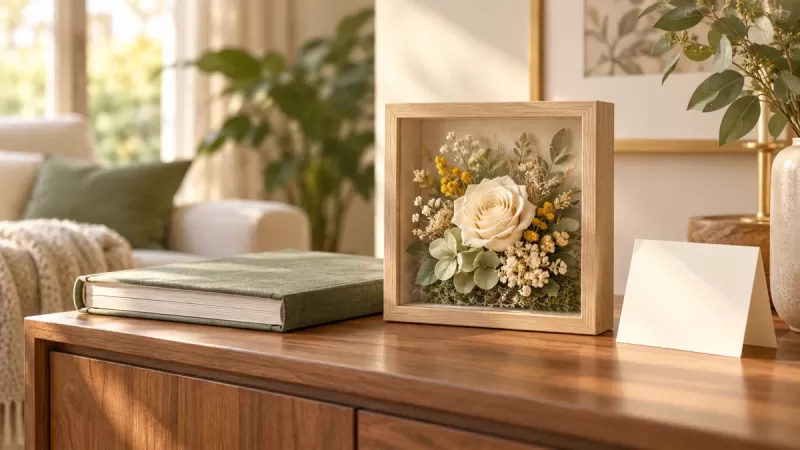
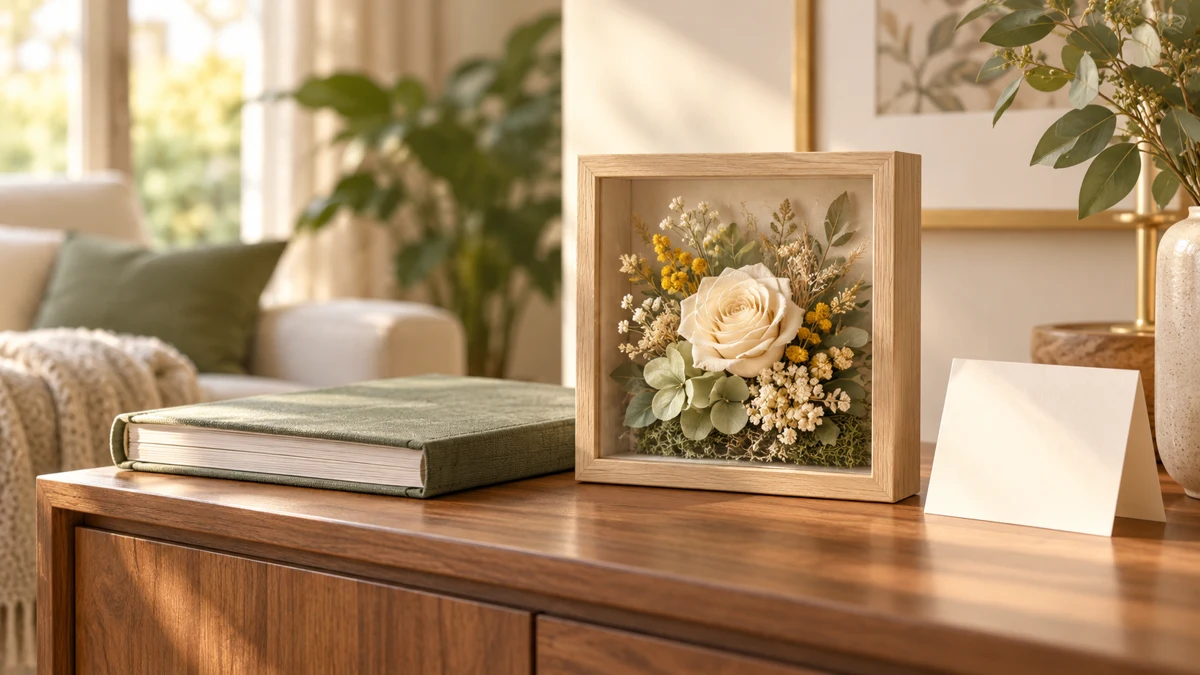
The featured illustration is an editorial home-gift scene. Its frame, album and card do not show an exact product configuration or items included with a purchase. Use the real listing for buying decisions.
6. Plan a low-pressure handover and realistic care
Ask whether the recipient would prefer collection, an agreed delivery, or a visit another day. A present should not create an obligation to host guests or send family photographs in return. If they are travelling to meet the baby, do not assume they want to carry a decorative object with them. Delivery to their own home after the trip may be more convenient if they agree.
Read the current delivery information before selecting a date. Do not promise arrival for a birth, announcement or family gathering unless the seller has confirmed the relevant service. Address and delivery preferences should come from the recipient rather than guesswork.
For upkeep, use the preserved-flower care guide alongside the item's instructions. Do not add water or treat the display like a fresh bouquet unless its actual instructions say otherwise. Avoid guaranteeing an exact lifespan, maintenance-free ownership or suitability for every room.
7. Make the final decision with five checks
- The grandparent welcomes a decorative present rather than another kind of support.
- The family news can be acknowledged, and the card uses approved names and wording.
- The selected item fits an agreed adult-home display space.
- The current listing confirms the exact item and any requested personalisation.
- The handover, delivery and care expectations are realistic and do not create an obligation.
If one answer is unclear, pause the purchase and ask. You can still send a kind message. A smaller, wanted gesture is a better choice than an elaborate keepsake based on assumptions about the family's private circumstances.
8. Frequently asked questions about new-grandparent flower gifts
Is a gift necessary when a friend becomes a grandparent?
No purchase is required. A personal congratulations message can acknowledge the news. Choose a physical gift only if it suits the person, your relationship and their preferences.
Should I buy a baby present instead?
Ask who you intend to celebrate. A gift for the grandparent is for their own enjoyment. A gift for the parents or baby should follow that family's wishes rather than being treated as interchangeable.
Can I use a grandparent title without asking?
It is better to confirm the preferred wording first. If a title is undecided, address the recipient by name and keep the message on a separate card rather than permanently personalising the display.
Does preserved mean suitable for a nursery?
No. Preserved describes the flower treatment, not infant safety or nursery suitability. Treat the item as decoration, not a toy, and use the actual product instructions and an agreed household location.
What if the grandparent does not want more possessions?
Respect that preference. Send a note, arrange a mutually welcome conversation, or ask whether another gesture would help. There is no need to replace an unwanted object with a different unwanted object.
Leave a comment