-36x36.jpg)



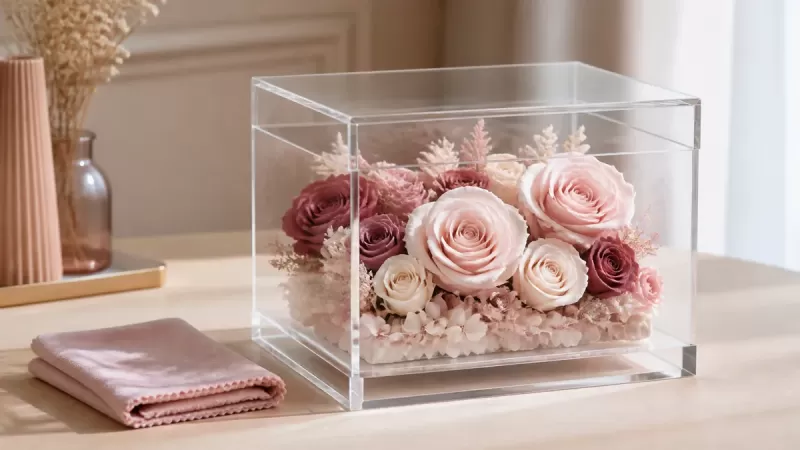
Keep preserved roses in an acrylic box indoors, dry and out of direct sunlight. Do not water or mist the flowers, avoid touching the petals, and leave the clear cover in place during normal display. Clean only the outside of the case with a clean, soft, lint-free cloth. Do not spray liquid onto the box or assume that a household glass cleaner is safe for acrylic.
An acrylic cover reduces routine dust and accidental contact. It does not make the arrangement immune to light, humidity, heat or sudden temperature changes, and it should not be described as airtight unless the product documentation says so.
Do not apply hairspray, craft sealant, an ultraviolet-protection spray or another DIY coating to a finished arrangement unless the maker of the exact product instructs you to do so. Community discussions sometimes suggest extra sprays for sentimental roses, but an anonymous suggestion is not evidence that a coating is compatible with preserved petals, dyes, adhesives or acrylic.
Fact checked: 22 August 2026. Always follow the care card supplied with your exact arrangement when it differs from this general guide.
Preserved rose box care at a glance
| Care point | What to do | What to avoid |
|---|---|---|
| Water | Keep the flowers and base dry. | Watering, misting, wet cloths inside the case or flower food. |
| Light | Choose a shaded indoor position with indirect room light. | Sunny windowsills and strong display lamps. |
| Humidity | Use a normally dry room with stable conditions. | Bathrooms, humidifiers, steam, damp kitchens and wet storage. |
| Heat and airflow | Keep a comfortable distance from heating and cooling outlets. | Radiators, fireplaces, hot appliances and direct air vents. |
| Handling | Move the arrangement by its base or case with both hands. | Pressing petals, lifting by decorative parts or rearranging flowers. |
| Case cleaning | Start with a clean, soft, lint-free cloth on the exterior. | Paper towels, abrasive pads, direct sprays and unverified solvents. |
Why preserved roses do not need water
Preserved roses are prepared for decorative display rather than continued growth in a vase. They do not use water like freshly cut stems. Adding water can affect petals, dyes, adhesives, foam, decorative bases or other materials inside the arrangement.
Florever's care guidance for its preserved flowers says not to water them and warns that direct sunlight and humidity may cause fading, color movement or other damage. That manufacturer guidance supports the conservative rules in this article, but it does not prove the process or tolerances of every FLOWEROF arrangement.
If liquid enters the box, do not rub the petals or use heat to speed drying. Place the arrangement on a stable surface away from more moisture and contact the seller with photographs and the order details.
Choose the right place for the display
Keep it away from direct sunlight
Avoid a shelf or table where direct sun crosses the arrangement during the day. Strong light can contribute to color change, and the clear case should not be assumed to provide ultraviolet protection. The Royal Horticultural Society gives similar placement advice for dried floral displays, recommending that they be kept out of direct sunlight and away from moist rooms. Dried and commercially preserved flowers are not identical, but both are decorative botanical materials rather than living houseplants.
Avoid humid rooms and condensation
Bathrooms, areas beside a humidifier, steamy kitchens, damp basements and open windows during wet weather can expose the arrangement to moisture. High or changing humidity may affect natural plant material, colorants and construction materials. Choose a more stable room when possible.
Condensation on the inside of the case is a warning sign. Move the box away from the source of temperature or humidity change. Do not open a glued or fitted display simply to wipe the inside. Contact FLOWEROF if condensation persists or if color transfers to the case.
Keep distance from heat and strong airflow
Do not position the box directly above a radiator, beside a fireplace, under a hot lamp or in the path of an air-conditioning outlet. Heat and constant airflow can change the local conditions around the flowers even when the rest of the room feels comfortable.
Use a stable, level surface
Place the arrangement where it is unlikely to be knocked, tilted or pulled down. Check the complete dimensions before choosing a shelf. Keep the display away from edges and use two hands under the base when moving it.
How to clean the acrylic flower box safely
Acrylic is clear and lightweight, but it can scratch or develop fine surface cracks if the wrong cleaner is used. The Canadian Conservation Institute's display-case guidance notes that household cleaners may contain abrasives that scratch acrylic and solvents that can cause crazing. It advises using products intended for the specific plastic.
- Make sure the box is stable and your hands are clean and dry.
- Use a clean, soft, lint-free cloth to lift loose dust from the exterior with light pressure.
- For fingerprints that do not lift, check the product care card or ask FLOWEROF which acrylic-safe cleaner is approved for the exact case.
- If an approved cleaner is needed, apply a small amount to the cloth, not directly to the box. Keep all liquid away from seams, openings, the base and the flowers.
- Stop if the acrylic becomes hazy, sticky, streaked or marked.
Do not use paper towels, scouring pads, magic erasers or abrasive polish for routine cleaning. Do not improvise with alcohol, acetone or strong solvent cleaners. A cleaner that is suitable for glass is not automatically suitable for acrylic.
Should you open the acrylic case?
Leave the cover in place during normal display. Some flower boxes are designed to open, while others are fitted, glued or integrated with the base. The appearance alone does not tell you which construction you have.
Open the box only when the product instructions explicitly say it is removable and there is a genuine need. Do not pull on the cover, force a seam or insert a tool. Opening the case unnecessarily exposes the roses to dust and handling and may disturb the arrangement.
The current colorful preserved rose heart and romantic preserved rose heart both use clear acrylic displays. Their live product pages and supplied care cards should remain the source for product-specific construction and handling instructions.
What to do after delivery
- Inspect the shipping carton before opening it and photograph visible damage.
- Lift the display by its base rather than by the cover or floral elements.
- Compare the arrangement with the ordered color option and product images.
- Check for a cracked case, loose components, severe petal displacement, moisture or color transfer.
- Keep the packaging until the inspection is complete.
- Contact the seller promptly if there is delivery damage. Do not attempt a structural repair before receiving instructions.
Small differences in bloom shape can occur because real flowers are natural materials. A cracked case, wet interior or detached arrangement is different and should be documented.
Troubleshooting common problems
| What you notice | Safe first response | When to contact the seller |
|---|---|---|
| Dust outside the case | Use a clean, soft, lint-free cloth with light pressure. | If the surface marks, clouds or remains sticky. |
| Condensation inside | Move the display away from humidity and temperature changes. | If moisture remains, returns or reaches the flowers. |
| Color changing gradually | Check sunlight, strong lamps, heat and humidity. | If the change is sudden, patchy or accompanied by liquid. |
| Loose petal or component | Do not press, glue or rearrange it. | If it arrived that way or affects the structure. |
| Cracked acrylic | Stop handling and keep sharp edges away from people and pets. | Immediately, especially when discovered after delivery. |
A simple monthly care check
- Check whether direct sunlight now reaches the display as seasons change.
- Look for condensation, moisture, case haze or color transfer.
- Remove exterior dust with a soft, lint-free cloth.
- Confirm the box remains level, stable and away from an edge.
- Do not open the cover or touch the petals just to inspect them.
For realistic display-life factors, read the preserved flower lifespan and care guide. To understand material differences, use the preserved versus dried flowers guide. Our guide to eternal and eternity rose terminology explains why a retail name alone is not a care specification.
Frequently asked questions
Do preserved roses in an acrylic box need water?
No. Keep the flowers dry. Do not water, mist or add flower food unless the maker gives different instructions for an unusual mixed product.
Can I put the rose box on a windowsill?
A sunny windowsill is not recommended. Choose a stable indoor surface out of direct sunlight and away from strong heat or cooling airflow.
Can I clean an acrylic flower box with glass cleaner?
Do not assume that a glass cleaner is acrylic-safe. Some household cleaners contain abrasives or solvents that can scratch or craze acrylic. Start with a soft, lint-free cloth and use only a cleaner approved for the exact case material.
Should I remove the acrylic cover to dust the roses?
Usually no. The cover is there to reduce dust and touching. Open it only if the product instructions confirm that it is removable and explain how to do so safely.
Should I spray preserved roses with hairspray or a clear sealant?
Not unless the maker of the exact arrangement tells you to. A spray can affect petals, dyes, adhesives or the acrylic surface. Keep the cover in place and follow the supplied care instructions instead of adding an unverified coating.
Why is there condensation inside the box?
Condensation suggests a moisture or temperature change around the display. Move it to a stable, dry indoor position and contact the seller if the moisture remains or reaches the arrangement.
How long will boxed preserved roses last?
There is no universal result. Flower material, production method, light, humidity, heat, handling and the condition a buyer considers acceptable all affect display life. Treat any stated period as product-specific and check whether it is an estimate or written warranty.
Where can I compare FLOWEROF acrylic rose designs?
Browse the eternal rose collection. The preserved rose swan offers a sculptural alternative to the two heart-shaped displays.
Sources and editorial notes
- Florever: Care and Handling for Preserved Flowers
- Royal Horticultural Society: How to dry flowers and foliage
- Canadian Conservation Institute: Cleaning Glass and Acrylic Display Cases
These sources support general material-care principles. They do not establish the exact preservation process, humidity tolerance, acrylic formulation or warranty of a FLOWEROF product. Product-specific records and supplied care instructions take priority.
Leave a comment