-36x36.jpg)



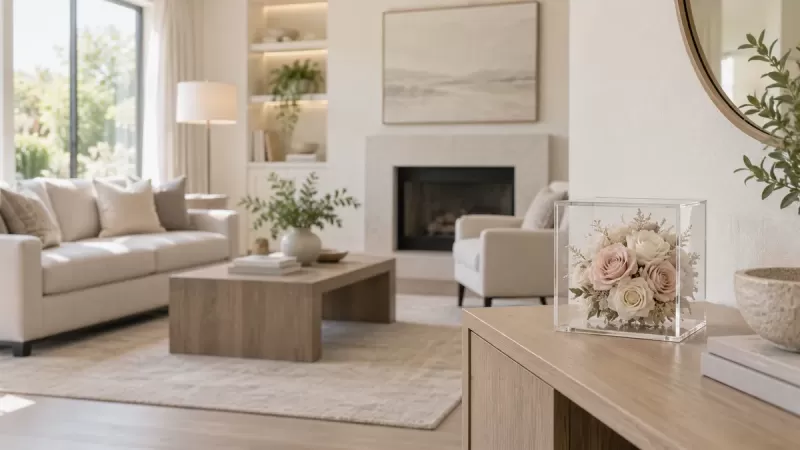
Can a preserved-flower display fit a home showing? It can be a small, removable indoor accent if it suits the room and the seller or agent wants it there. It is not a substitute for cleaning, decluttering, repairs or an agreed staging plan. Select a real item only after checking its dimensions, appearance and care needs. No flower display can promise more viewings, a faster sale or a higher offer.
Start with the room, not with an accessory
The National Association of REALTORS consumer staging guide describes staging as decluttering and styling a home to show its spaces. It recommends reviewing photographs, avoiding overcrowding and considering the scale of accessories. Its discussion of staging outcomes does not test preserved flowers. A compact arrangement is therefore a possible finishing detail, never a data-backed way to change a property's selling price. Decide what the room needs after removing distractions and checking the main sightlines.
Ask the listing agent or property owner first
If the home is being marketed by an agent or professional stager, follow the agreed plan. Ask whether a botanical accent is wanted, where it may sit, who will maintain it, and who will remove it after photographs or showings. In a rented or shared property, also obtain the appropriate permission. This is especially important when the display is borrowed or intended to remain someone's personal property rather than transfer with the home.
Choose a place that explains the space
A console, shelf or dining sideboard may have room for one modest object without blocking circulation. Leave the kitchen work surface usable and do not cover light switches, built-in features or a window. In her independent 2019 home-staging guide, designer Kylie M Interiors cautions against automatically putting fresh flowers in every room and discusses the effort of keeping them presentable. This is a dated practitioner's perspective, not evidence that preserved flowers outperform fresh, silk or no flowers. Together with NAR's advice on clutter and scale, it supports considering accessories selectively. Take a phone photograph from the entrance and from the listing-photo angle: if the object dominates the picture or hides the room, move or remove it.
Keep the visual choice neutral enough to be optional
For a broadly styled space, a restrained color and simple shape may be less distracting than a very large personalized arrangement. This is a design judgment, not a rule about all buyers. A seller who already owns a suitable display may not need to purchase anything. Compare the actual room palette and existing decor rather than buying an accessory because a generic staging checklist mentioned flowers.
Match the physical format to the surface
The FLOWEROF preserved-flower collection shows different formats. A flat frame, bouquet and rigid acrylic display occupy space differently. The actual sunflower frame listing gives approximately 20 × 15 cm and two floral styles. Those dimensions are not its full standing depth or packed shipping size. Ask about the support and base if the surface is shallow. Measure the available surface and the object's footprint; a photographed arrangement is not a substitute for its specifications. If the exact item will be ordered for a viewing date, read the current delivery information and do not assume a guaranteed arrival.
Use only a truthful photograph of the actual property
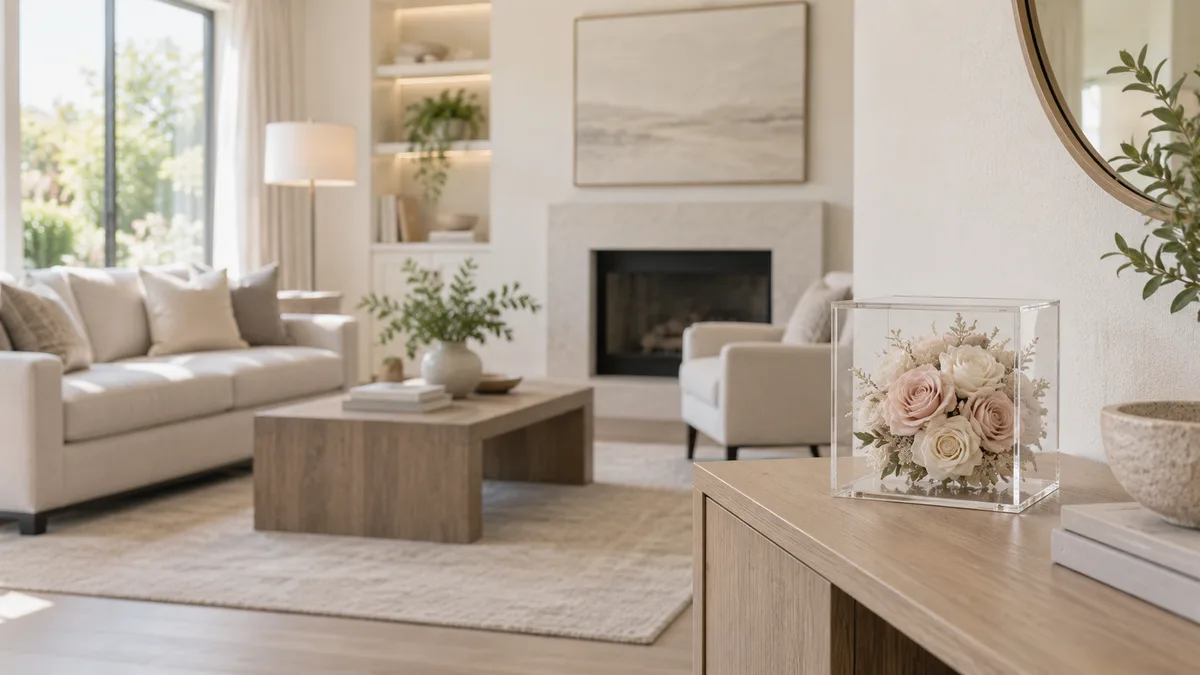
The generated room scene above is an illustration, not a real listing photograph or a FLOWEROF SKU. If a display will appear in property marketing, photograph the actual room and object under the applicable listing rules. Do not insert this illustration into a listing as though it depicts the property. Also make clear to the agent which movable staging pieces are excluded from a sale; decoration should not create confusion about what a buyer receives.
Protect both the display and the home
Put a stable display on a dry, level surface away from an open edge. Check that the base does not scratch a finished table. Preserved flowers are generally intended for indoor, dry display: FLOWEROF's care guide and an independent preserved-flower care guide both advise against watering and direct sun or humid exposure. Follow the exact seller's instructions for the actual item. Do not place an arrangement where a visitor may brush against it, where a child could reach it, or where it could fall during an open house.
Consider the showing routine, not just the photograph
A still photograph may make a small accent look effortless, but a property may have repeated showings. Decide who checks the piece between visits, whether lights or open curtains expose it to strong sun, and where it will be stored if the home is occupied. Unlike cut flowers, preserved arrangements do not need vase water, but that does not mean they tolerate every room or remain pristine indefinitely. If upkeep is uncertain, an empty surface may be better.
Do not confuse staging with a housewarming gift
This decision is about a temporary accessory in a property being shown. Our housewarming gift guide addresses choosing a gift for someone moving into a home; it does not tell a seller how to stage a listing. A personalized gift may be meaningful to a recipient yet too specific for neutral property photos. Keep these two purposes separate before selecting a product or writing any listing caption.
Check the offer and return terms before ordering
If you decide to buy a display, verify the exact product page, available options, total checkout amount, delivery details and terms before payment. Do not infer a price, stock level, return right or delivery date from this editorial example. If you need a specific dimension or material detail that is missing, ask FLOWEROF before ordering. Decide who owns the purchased or borrowed object and when it will be removed. Ask the listing professional how movable accessories should be described rather than treating this article as contract advice.
A short staging decision checklist
- Confirm the agent or property owner's staging plan and who owns the decoration.
- Clear clutter and fix obvious room presentation issues first.
- Choose one safe indoor position that does not hide the room or impede visitors.
- Verify the exact item's dimensions, appearance, care and current purchase terms.
- Photograph the real property honestly; remove the accent if it distracts.
Frequently asked questions
Will preserved flowers help a home sell faster?
There is no evidence here to make that claim. An arrangement is an optional visual accent; the property's condition, marketing and market context matter far more than this single detail.
Is the pictured box the same as the sunflower frame?
No. The illustration depicts a room-styling concept, not that catalog item. The live sunflower page shows a framed display with its own photographs and specifications. Check the actual object rather than ordering from an editorial image.
Can I leave a display beside a sunny window?
That is usually a poor choice. Indoor preserved-flower care guidance warns against prolonged direct sunlight and moisture. Follow the particular item's instructions and choose another position if the window receives strong sun.
Should the display appear in listing photographs?
Only if the owner and marketing professional agree and the photograph truthfully shows the property. A small accessory should not conceal a permanent feature or make a generated example look like the actual room.
Should I buy a personalized flower frame for staging?
Not by default. A customized frame can be a thoughtful private gift, but a neutral staging accessory has a different purpose. Verify the intended audience, room and product before spending money.
Make the final choice in the actual room
A preserved-flower display can be considered when a room genuinely benefits from a small indoor accent and the seller is comfortable maintaining and removing it. Try the position, review a real room photo, and keep the object only if it helps visitors see the space rather than the decoration. If it does not fit, skip it. The honest decision may be not to buy.
Leave a comment