-36x36.jpg)



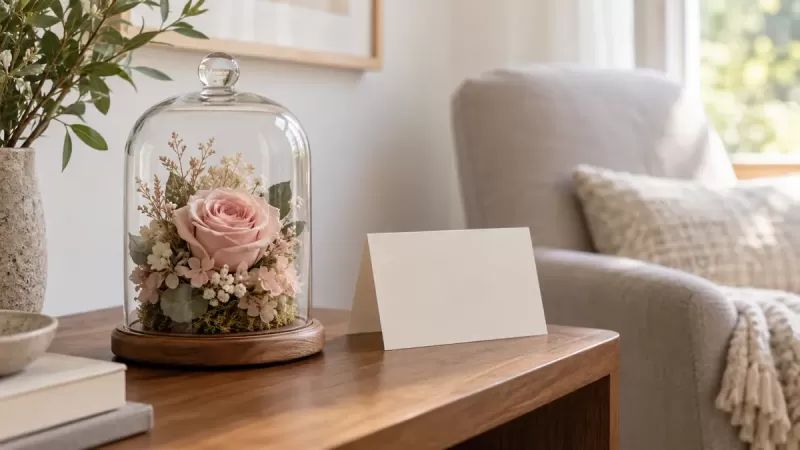
Would a preserved-flower gift be a good way to thank a family caregiver? It can be, if the person would actually enjoy a small decorative keepsake and has space for it. Start by acknowledging something specific they have done, and ask what practical help they would welcome. A flower display is an optional expression of gratitude, not a substitute for sharing the work of care. This guide is for a relative or friend providing unpaid family care; it is not advice about gifts to paid staff or a gift for the person receiving care.
Recognize the person, not just the role
A caregiver may be a sibling arranging appointments, a partner helping with daily tasks, or a friend quietly coordinating meals. Rather than calling someone a hero when that language does not fit them, name a real action you noticed: the weekly drive, the patient phone calls, or the way they keep everyone informed. Avoid sharing the care recipient's private condition in a public message or gift note.
Ask whether a physical gift would be welcome
Some people love a lasting object on a shelf. Others are short of space, moving between homes, or simply do not want another thing to look after. A discreet question can prevent a well-meant gift from becoming a chore: “Would a little flower display feel like a treat, or would a meal or errand help more?” The California Caregiver Resource Centers presents a note, practical help and time as alternatives to buying a gift. Treat the answer as the decision, not as an objection to overcome.
Pair appreciation with a concrete offer of help
If you can share a task safely and with the family's agreement, say exactly what you can do and when. An offer to collect groceries on Thursday is easier to consider than “let me know if you need anything.” The Family Caregiver Alliance's guide to accepting help gives examples of specific tasks and conversation. Do not promise respite, transport, personal care or medical support you are not equipped to provide. A preserved-flower gift may accompany genuine help, but it does not provide that help by itself.
Choose the object by their taste and room
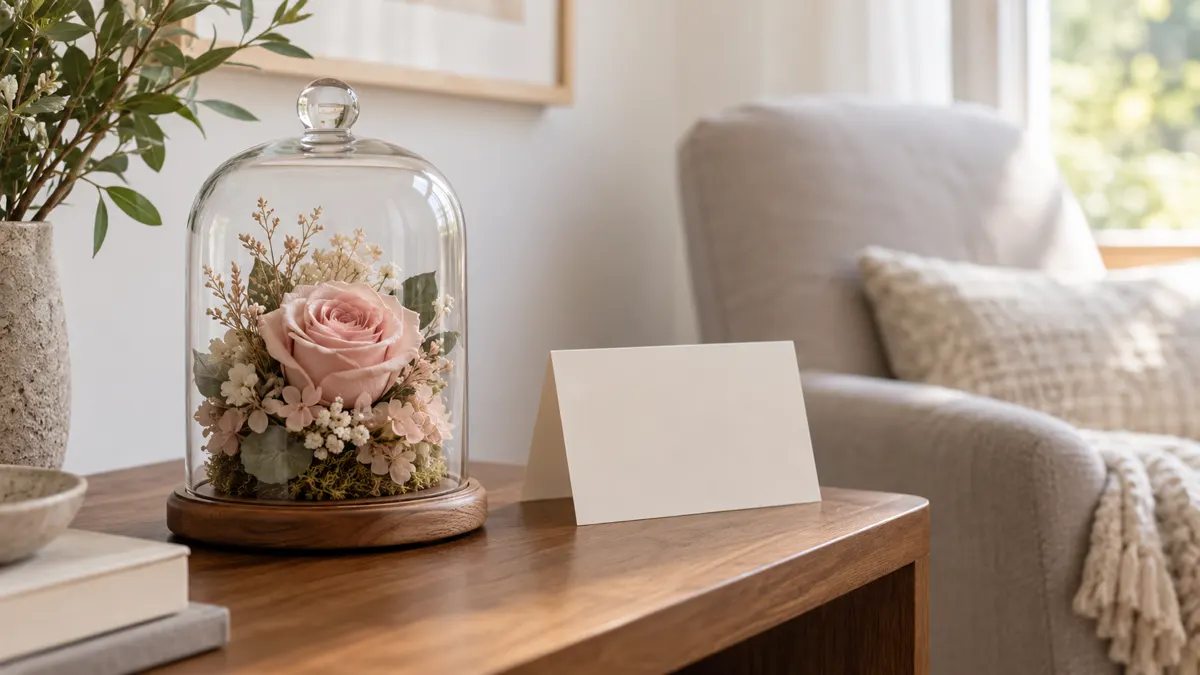
Look at the actual dimensions, color, container and care information rather than assuming a pretty picture matches their home. FLOWEROF's preserved-flower collection shows available formats; a framed preserved sunflower differs from a rose box in shape and display needs. Check the selected product's current options and photographs before ordering. If the caregiver shares a small home or works between locations, ask where the piece could sit without getting in anyone's way. The image above is illustrative, not a listed SKU.
Prefer a low-effort display only if they want one
A decorative keepsake can make sense when the recipient wants something they can place and leave in a dry indoor spot. But “low effort” is not the same as “no care,” and there is no universal lifespan guarantee. Follow the instructions for the particular item, and see FLOWEROF's preserved-flower care guide for ordinary display considerations. Do not put an arrangement near a heat source, in a damp room or where it may obstruct care activities. Do not claim that preserved flowers are medically safer, allergy-free or suitable for a care setting without checking the real circumstances.
Make the message specific and pressure-free
A short note can say: “I noticed how you kept the family connected during a difficult month. Thank you for your patience and time. I would also be glad to handle Tuesday's grocery run if that would help.” Change every detail so it is true for your relationship. Hallmark's caregiver-message guidance also emphasizes personal acknowledgement; it is inspiration, not text to copy into a mass-produced note. Ask before including names, diagnoses or private family stories. A recipient should be free to decline the display or practical offer without feeling ungrateful.
Keep the choice separate from a gift for the care recipient
This decision is about thanking the caregiver in their own right. If you are instead choosing a room gift for someone living in an assisted-living residence, the resident's preference and that exact residence's rules come first; our assisted-living resident gift guide covers that different question. Do not assume that an item accepted in a private home is allowed in a facility, or that a gift to a resident automatically recognizes the family member providing care.
Compare a frame and a boxed arrangement honestly
Start with where the gift might live. A frame may suit someone who wants a contained wall or shelf object; a box needs a suitable horizontal surface. Neither is automatically the better thank-you. FLOWEROF's bouquet-versus-box comparison helps separate the formats, but the live product page controls dimensions, colors and what is included. Never infer a vase, note card or protective case from an editorial illustration. If the recipient would rather have a meal, time together or help with a task, choose that instead.
Check the purchasing and handoff details
Before buying, confirm the selected item, total cost, delivery destination, return terms and whether someone can receive the parcel. FLOWEROF's current delivery information is the source for this store's terms; the FTC's online-shopping guide independently advises checking descriptions, delivery and refund policies. Neither source guarantees arrival on a particular day. If timing matters, ask the caregiver for a convenient delivery window or choose a handoff you control. Contact the store through its published channel if a product or delivery detail is unclear.
When a flower gift is not the right choice
Skip it if the caregiver has said they do not want decorations, the household cannot accommodate the object, the gift would be an unwelcome expense to them, or you are trying to avoid a promised share of work. A handwritten note, a scheduled meal, or a practical errand may be more useful. There is no need to frame a purchase as the only sincere expression of care. The point is to respond to this person's preference and situation, not to follow an occasion calendar.
A simple decision checklist
- Can I name one true action for which I am grateful?
- Would this person enjoy a lasting flower display, or prefer practical help?
- Is there a safe, dry and unobtrusive place for the actual item?
- Have I checked current dimensions, options, total cost and delivery terms?
- Can I offer a specific task without making a promise I cannot keep?
If the answers support a floral gift, choose the real product with their taste in mind and keep the message personal. If not, let the answer guide you toward a different expression of thanks. For an item-specific question, contact FLOWEROF before ordering.
Frequently asked questions
Are preserved flowers an appropriate gift for a family caregiver?
They can be when that particular caregiver likes decorative flowers and has room for the chosen item. Ask first; a note or a concrete offer of help may be more welcome. This article concerns an unpaid family or friend caregiver, not professional staff gift policies.
Should the gift replace helping with care tasks?
No. A display expresses thanks; it does not share the time, money or responsibility of caregiving. If you can help, offer a specific safe task and let the caregiver decide whether to accept.
What should I write in the thank-you note?
Describe one real action you noticed, thank the person without exaggeration, and avoid private medical details. If you offer help, make it specific and optional. Do not copy a stock message that sounds unlike your relationship.
Is a framed sunflower or rose box better?
There is no universal winner. Compare the caregiver's taste, available space, exact dimensions, selected options and current product photographs. The editorial image here does not show a purchasable configuration or included accessory.
Can I promise delivery for a particular appreciation day?
Not from this guide. Review the live product and delivery terms, verify the recipient can receive the parcel, and ask FLOWEROF about uncertainty before purchase. Do not substitute a general shopping article for a store-specific delivery promise.
Leave a comment