-36x36.jpg)



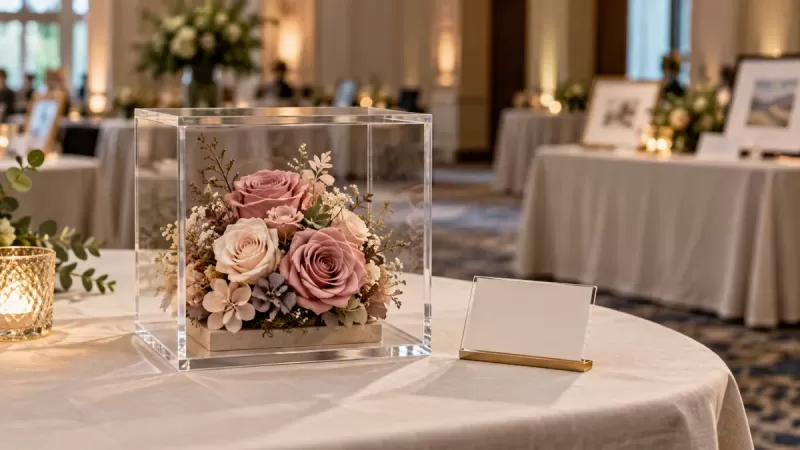
Could a preserved-flower display work as a charity silent-auction item? It can be considered when the organizer wants a decorative physical lot, can describe the exact item accurately, and has a safe plan for display and winner collection. Ask the organizer before buying or donating anything. The pictured arrangement below is editorial illustration, not a FLOWEROF product listing. This guide is about preparing an auction lot and its handoff, not thanking a volunteer or donor and not promising that flowers will raise a particular sum.
Start with the auction audience, not the flower color
Ask who will attend and whether a display piece fits the event. A floral lot may appeal to guests looking for home or desk decor, but that is a hypothesis to test with the organizer, not a forecast of bids. If most guests prefer experiences, food or travel, a physical flower display may be a poor fit. DonorPerfect's silent-auction planning guide recommends curating donated items for the audience and gathering descriptions and photos. It does not make any FLOWEROF item or fundraising outcome a sure choice. Ask which item categories the organizer is still accepting and what information they need before selecting a product.
Get the organizer's acceptance and display rules first
A donor should not assume that a nonprofit can accept every object, display it at the venue, or arrange delivery. Find out whether the event is in person, online or hybrid; who owns the lot after donation; whether there are size, material or packaging restrictions; and whether a physical sample can be shown. If the organizer has a procurement form, use it. Some venues may restrict where a boxed arrangement can sit. This is a local event decision, not a universal preserved-flower rule. Keep written confirmation of what the organizer accepted and when they need the item, but do not include private organizer or bidder details in public catalog copy.
Choose only from a live, identifiable item
Browse the current FLOWEROF preserved-flower collection and open one specific product page before committing it to the auction. Confirm the displayed dimensions, options, materials, packaging, price and availability there. A photograph in a guide is not an offer; the picture in this article is an illustrative still life and must not be used as the lot's product photo. If the organizer needs an enclosed arrangement, compare the live listing with the bouquet-versus-acrylic-box guide to frame display and carrying needs. Do not promise a box, card, custom color or personalization unless the chosen listing actually includes it.
Describe the exact lot and any limitations
An auction catalog should let bidders understand what they would receive. Greater Giving's item-description guidance calls for a clear item name, description and relevant restrictions, supported by photos. For a flower display, use the verified product name and actual dimensions, identify whether the pictured item is the one to be handed over, and state any organizer-approved pickup or delivery limit. Avoid phrases such as “forever,” “maintenance-free,” or “guaranteed to arrive by Friday.” For care wording, link bidders to the preserved-flower care guide and keep any claims consistent with the exact product's live description.
Make the image and the item match
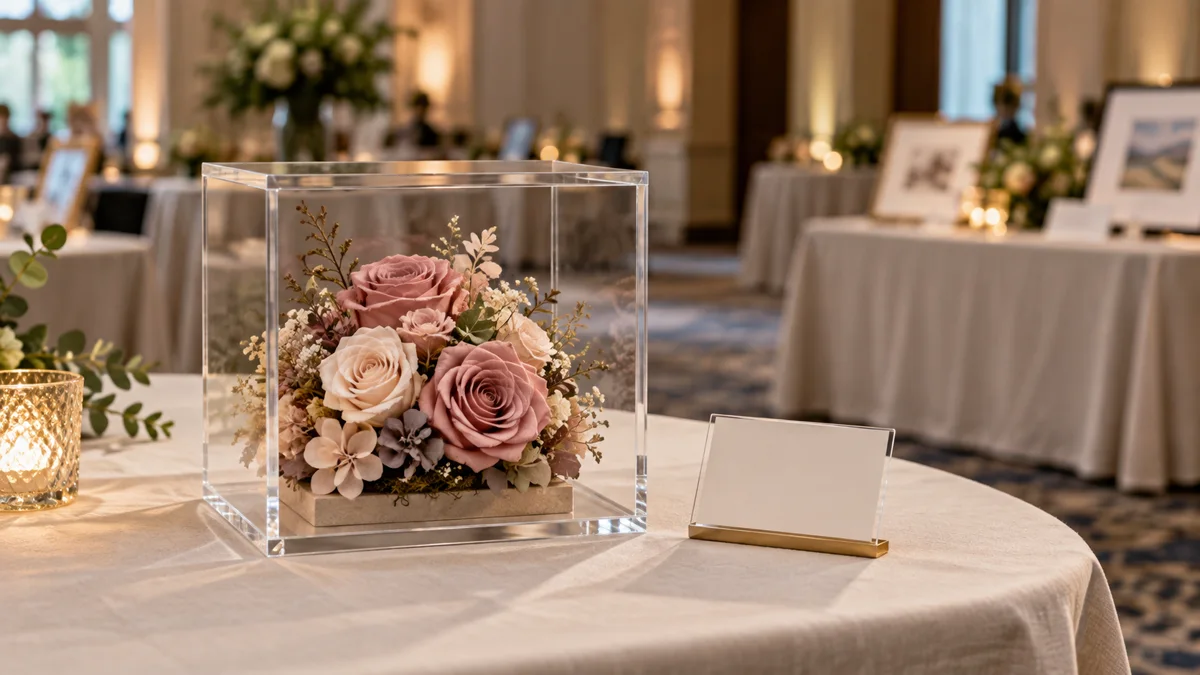
Virtual bidders may see only a photo. Photograph the actual donated arrangement against a plain background, including its container and scale, with the organizer's permission. If the lot is a voucher for a future product rather than an item physically present, say so prominently and describe the redemption conditions the organizer has approved. Do not substitute a generated lifestyle image for a product photo. The illustration above can explain the concept of an auction-table display, but it cannot establish stock, included accessories or the appearance of the lot. Greater Giving also recommends clear photos for online and hybrid item descriptions; their advice supports clarity, not an assurance of higher bids.
Plan a protected display
Decide whether visitors may handle the lot or only view it. A stable table away from drinks and a readable card beside the item can help the organizer present it without requiring people to move the arrangement. Confirm who supplies any protective case and whether it is included in the winning lot. If the product already comes in an acrylic enclosure, check the live description and dimensions; do not add a second case merely because this illustration shows one. DonorPerfect discusses display preparation and clear descriptions as part of auction planning. The organizer should approve placement because the venue, crowd flow and display equipment are theirs to manage.
Decide who handles pickup or delivery
A winning bid is not the same as a handoff plan. Ask whether the organizer will hold the physical lot, arrange pickup, or ship it, and who bears any cost. 32auctions' pickup guide recommends published collection arrangements and an item-identification process. Its operational examples are not FLOWEROF delivery promises or universal event rules. The organizer should set their own bidder terms before bidding opens. For any FLOWEROF purchase sent to the organizer, check the current delivery information and confirm the receiving address directly rather than assuming the venue can accept parcels.
Agree on donor credit and photos
Some item donors welcome a named credit; others prefer no public mention. Ask the organizer what donor name, business name or product photograph they intend to publish, and grant only the permission you actually control. Do not imply FLOWEROF sponsors or endorses the event merely because a FLOWEROF product was purchased or donated by someone else. If the organization wants to use a brand logo or catalog photography, it should seek the appropriate permission rather than copying it from this guide. A factual lot description can work without personal donor information, attendee names or a promotional claim.
Keep price, bids and tax treatment separate
The product's current checkout price, the organizer's catalog value, the opening bid and a bidder's eventual payment are different figures. This page does not set a valuation, minimum bid, tax deduction or charity-receipt rule. Leave those decisions to the organizer and its advisers, following the event's own procedures and applicable jurisdiction. Do not infer an auction's success from an ordinary retail listing. If the organizer requests documentation, provide accurate purchase or item facts through its private process rather than publishing receipts or personal transaction details in the catalog.
Draft catalog copy that a bidder can verify
A short draft might read: “One [verified product name] preserved-flower display, [verified dimensions], in the [verified container]. The physical item shown in the lot photographs is included. Winner collection: [organizer-approved location and window].” Replace every bracket with confirmed facts before publication, and remove a sentence if the item is not physically present. The catalog should link to the exact chosen item or supply its accurate photo, not this article's illustrative image. The organizer can add its lot number and bidder rules. Keep the description factual and readable so the winner knows what was offered.
Recheck the purchase before committing
If you are purchasing the lot, verify the exact option, total, delivery destination and event deadline on the live product and checkout pages. The FTC's online-shopping guidance recommends checking item descriptions, shipping terms and return policies before paying. Read FLOWEROF's current terms and conditions and use Contact Us for an unclear product detail. This article cannot confirm tomorrow's stock, transit time, event acceptance, refund decision or recipient satisfaction. Do not turn a pending purchase into a published lot until the organizer confirms the arrangement.
Know when to choose another lot
Skip this category if the organizer cannot safely display or hand over a physical item, the exact product is unavailable, the receiving location is uncertain, or a bidder would have to guess what is included. A simple cash donation or a different organizer-approved item may be more useful. If the group primarily wants to thank people who gave time, read the volunteer-appreciation guide; that is a separate recognition decision and should not be recast as an auction-lot pitch. The best next step here is to ask the organizer for its lot requirements before shopping.
Frequently asked questions
Can an illustrated image be the auction listing photo?
No. Use photographs of the exact donated item or a clearly labeled representative image approved by the organizer. The image above is an editorial concept, not evidence of what bidders will receive.
Should the donor set the opening bid?
The organizer should apply its own auction policy. A retail price is not automatically an opening bid, fair-market valuation or tax figure. Share accurate item details privately when requested.
Can the winner receive the flowers later?
Only if the organizer has agreed to a future-item arrangement and states the actual redemption, pickup or delivery conditions before bidding. Do not imply that a FLOWEROF shipment is included without a confirmed plan.
Is an acrylic enclosure necessary?
Not universally. It may make display and transport easier for some arrangements, but compare the exact product, dimensions and venue rules. An enclosure shown in an illustrative image is not automatically part of a listing.
What if the item or event plan changes?
Tell the organizer before the catalog is published or bidding continues. Correct the lot description and photos through its process; do not silently substitute a different product, option or handoff promise.
Leave a comment