-36x36.jpg)



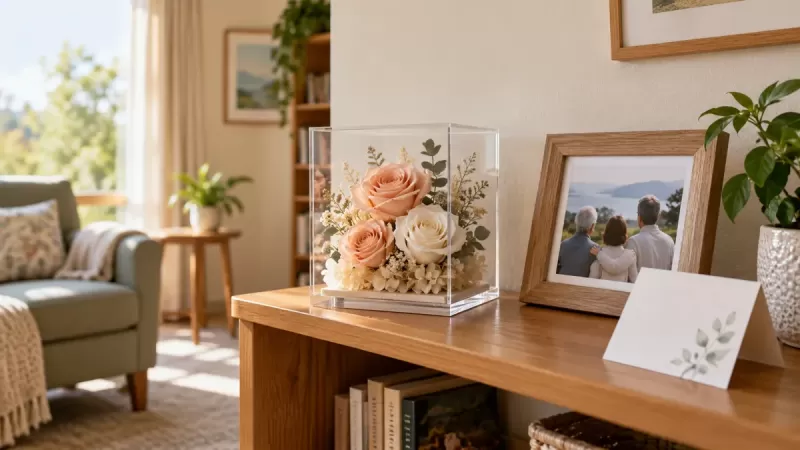
Could a preserved-flower display be a gift for someone living in assisted living or a nursing home? Possibly, if the resident wants it, the specific residence accepts it, and there is a safe place to keep it. Do not send a large surprise arrangement based only on a photograph. Ask the person first when possible, check the room and the home's current rules, and consider whether a visit, a card or a favorite photograph would mean more. This is a gift-planning guide, not medical advice or a claim that preserved flowers improve health or mood.
Start with the resident's preference
The person receiving the gift should guide the decision. Ask whether they like floral objects, prefer a particular color, already have enough room decorations, and would enjoy seeing this display every day. A familiar photo album or an unhurried visit may be a better fit than another object. The Maplewood nursing home's gift guide advises considering space, ease of use, safety and changing interests; those are its own practical suggestions, not a universal rule for every residence. A gift that requires the person to rearrange their room can become a chore rather than a pleasure.
Ask the specific residence before ordering
Care settings use different visitor, delivery, room and decoration policies. The Presbyterian Senior Living family guidance says flowers are welcome in its setting, while its notice also discusses how gifts should be delivered. That document does not approve a FLOWEROF product at another residence or guarantee that the policy is unchanged. Ask the resident's own home whether a closed floral display is allowed, whether a delivery may be sent directly, and whether a staff member or family visitor should hand it to the resident. Record the answer rather than inferring permission from a general web article.
Check the actual shelf and room layout
Find out how much clear, stable surface is available without blocking a lamp, call button, walker path, bedside necessities or cleaning routine. A display should not be balanced on a narrow ledge or placed where another resident might brush it. The U.S. CMS long-term-care survey guidance describes a safe, homelike environment and resident possessions within practical limits for covered facilities. It does not certify any floral arrangement as safe or apply to every assisted-living setting. If space or handling is uncertain, ask the home's team for a suitable location or choose a smaller, simpler gift.
Compare formats using current product details
FLOWEROF's preserved-flower collection includes boxed bouquets and a framed sunflower design. The category lists approximate sizes, but confirm the exact product and selected option before buying. A frame can stand differently from a three-dimensional acrylic box, and a room photograph can make either seem smaller than it is. The format comparison explains the general trade-off; it does not replace measuring the real shelf or checking today's product specifications.
Choose a display the resident can see and enjoy
If the resident chooses the location, place the gift at an easy-to-view height and keep their everyday items reachable. Do not move personal photographs or other possessions without asking. Movilla House Nursing Home describes personalizing rooms with belongings, photos and flowers; its advice reflects that particular home's practices, not proof that any flower display has a therapeutic effect. Its article is a reminder to fit a gift around the resident's life rather than treating the room as a blank decorating project.
Consider care without making health claims
FLOWEROF's preserved-flower care guide says its displays generally belong indoors, away from water, direct sun and excessive humidity. A box avoids a vase of water but still needs a stable, suitable surface and gentle handling. Do not describe preserved flowers as allergen-free, infection-safe, scent-free, maintenance-free or medically beneficial. Those claims would require evidence about the exact item and person. If the residence has restrictions or the recipient has a personal sensitivity, follow the facility's and person's guidance rather than this editorial example.
Make the handoff personal and simple
A short note can explain why you chose the gift without asking the resident to feel grateful for an object they did not request. You might mention a favorite color, garden memory or shared walk. If you visit, let the person decide whether to open the box, where to put it, and whether to keep it. If a staff member receives the parcel, ask how it is identified and delivered to the correct person without relying on a public note that discloses private room or health information. This guide does not require you to share personal details with FLOWEROF beyond those needed for the actual purchase and delivery.
Do not confuse a long-term room gift with a hospital gift
A resident's room may be a continuing home; a hospital room is often a short-stay care setting with different unit rules. Our hospital flower gift guide addresses a patient and the relevant ward's policies. This article addresses resident preference, limited personal space and a display that may remain in an assisted-living or nursing-home room. Do not copy a hospital approval or delivery assumption across settings.
Check delivery and returns before payment
If sending rather than carrying the gift, confirm the residence's delivery instructions and the exact recipient details through the authorized family or resident contact. Then review the live FLOWEROF delivery information, product options, checkout amount and terms. The FTC online-shopping guide recommends examining delivery and refund terms and keeping records. Neither the FTC nor this article promises a facility will accept a parcel, a delivery date, or a return for a personalized product. If acceptance is uncertain, resolve it before placing an order.
A practical permission-first checklist
- Ask the resident whether an indoor floral display is wanted.
- Ask the specific home about permitted items, delivery and placement.
- Measure the available surface and choose a stable location that does not block daily needs.
- Verify the exact current product option, dimensions, care and purchase terms.
- Offer help placing the gift, but let the resident keep control over their room.
Frequently asked questions
Do all assisted-living or nursing homes accept preserved flowers?
No universal approval is established here. Policies differ by residence and can change. Ask the specific home and the resident before buying or sending an item.
Is a preserved display always better than fresh flowers?
No. It has different care and presentation needs. The resident may prefer a fresh bouquet, a photograph, a visit or no floral object. Choose with the person, not on a general claim of superiority.
Can I place it on the bedside table?
Only if the resident wants it there and the surface has enough space without blocking essential personal items, equipment or movement. Ask staff for placement guidance when needed.
Is the article image an approved care-home product?
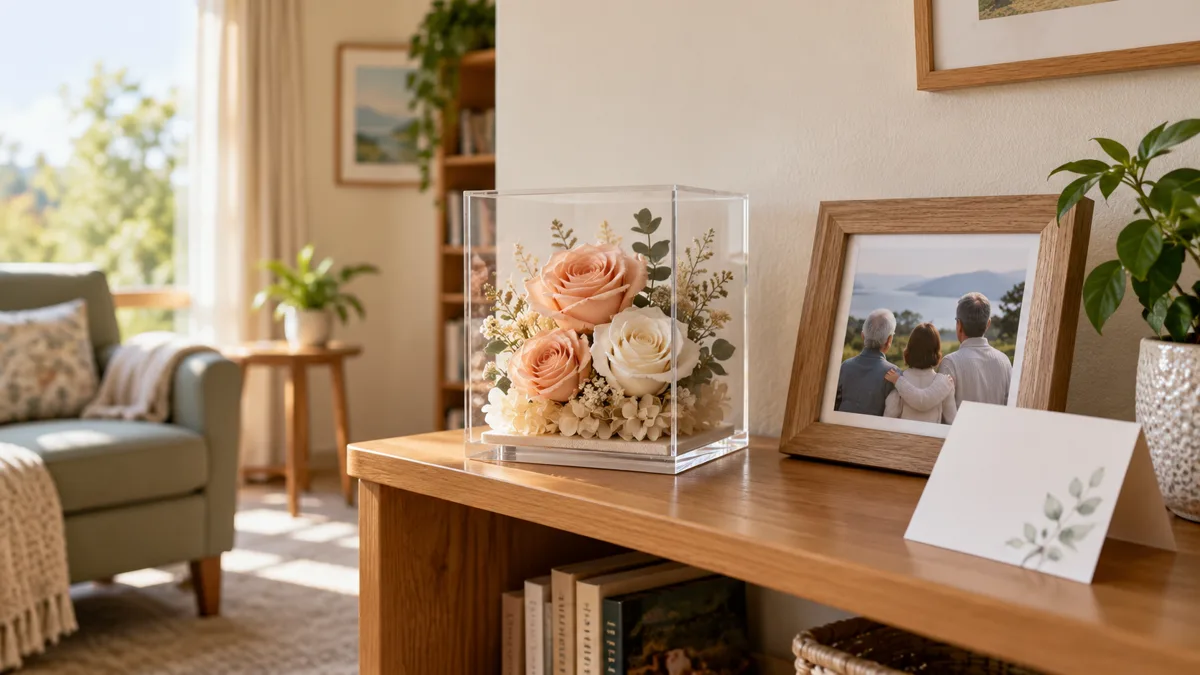
No. It is an illustration, not a FLOWEROF product photo or facility approval. Check the actual listing and local rules for the real item.
Should I send the arrangement directly to the residence?
Ask the residence first about its current receiving procedure and whether the resident prefers a visitor handoff. Check the store's live delivery information before paying; do not assume a date or acceptance.
Make a choice that respects the person and their room
A preserved-flower gift may fit a resident who wants it and has a suitable permitted display space. It is equally reasonable to choose a smaller alternative, a card, or more time together. If the person and residence welcome a floral keepsake, compare current FLOWEROF designs and ask FLOWEROF about any unstated product detail. Keep the resident's preference and the home's current policy ahead of the purchase.
Leave a comment