-36x36.jpg)



Is a preserved-flower display a suitable thank-you for a wedding officiant? It can be, but only after you have handled any agreed fee or honorarium and checked whether this particular person would welcome a decorative gift. A short, specific note is a safer starting point than assuming an object is expected. This guide concerns appreciation for someone who conducted your ceremony. It does not set officiant fees, interpret a venue or religious policy, or plan the wedding's floral decor.
Settle the service arrangement first
Before considering a gift, return to the arrangement you made with the officiant. Was there a professional fee, an agreed honorarium, a donation, or another arrangement? Fulfill it as agreed and ask the officiant or the relevant organization about any uncertainty. Emily Post's officiant guidance pairs a personal thank-you with paying the appropriate service fee. A flower display is not a replacement for compensation. This article deliberately gives no universal amount because the arrangement and local context vary.
Consider who conducted your ceremony
A hired professional, a clergy member, a civil official, and a friend who became an officiant can have different expectations and boundaries. An object suitable for a friend may be awkward for someone working under an employer, congregation, or venue policy. The Knot's officiant thank-you advice discusses a note and an optional small gift, especially when a friend or family member officiates. Use that as a prompt to ask about this person's preferences, not as a rule that every officiant should receive flowers. Never infer that their role permits gifts of any value.
Write a note that names their contribution
A useful note mentions something the officiant actually did: making space for your vows, helping you feel at ease, or guiding a rehearsal with care. Keep it accurate and specific. If the ceremony involved a personal or spiritual element, let the words reflect what the officiant shared with you rather than borrowing a generic script. A handwritten card can be complete on its own. Do not put private ceremony details, a title, or a photo on a permanent display without consent. You can give the note promptly even if a separate gift decision takes more time.
Ask whether a lasting display would be welcome
Preserved flowers are meant to be displayed, so the recipient needs to want a decorative object and have a place for it. Ask discreetly if they enjoy flowers, whether they have a desk or shelf, and whether their workplace accepts personal items. A person who moves between venues may prefer a card or another form of thanks. Do not surprise an officiant with an object that must be carried through the ceremony or stored at a venue. Choosing no floral gift is a respectful outcome when preferences are unknown.
Keep professional boundaries in view
Some officiants may have organizational gift rules, and some may prefer a donation or simply a note. Ask the person or their office rather than assuming the policy. If the service arrangement already covers all their time, a gift remains optional; if a required payment is still outstanding, address that first. Avoid language that makes the gift sound like a tip, a request for special treatment, or a review incentive. A thank-you should close the interaction warmly without creating a new obligation to respond or display the object publicly.
Choose a format for the recipient's own space
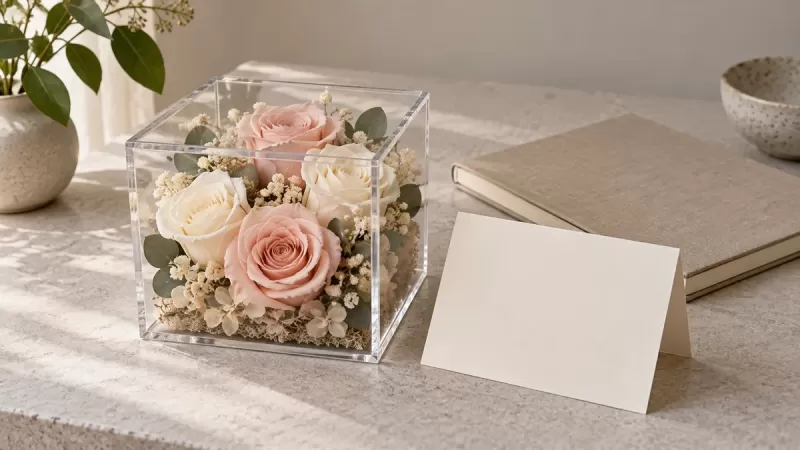
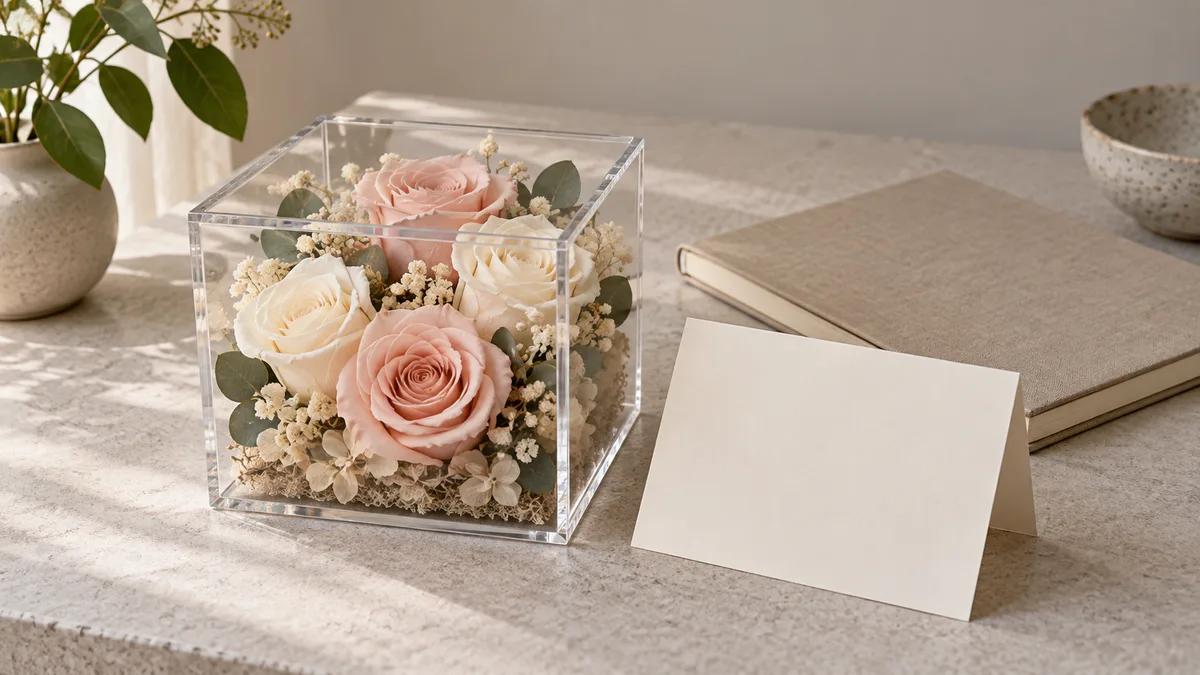
If flowers are welcome, begin with the live FLOWEROF preserved-flower collection and check the dimensions and materials on the exact product page. The bouquet-versus-acrylic-box comparison can help you think about enclosure and placement, but it cannot tell you what this officiant owns or prefers. An enclosed display might suit a stable shelf; another format may be easier to carry. The photograph here is illustrative and does not verify that a particular flower mix, box, color, or accessory is for sale.
Do not turn a wedding palette into a personal preference
The officiant did not necessarily choose your event colors. A display that matches ceremony photographs may not suit their home or workspace. Ask about colors and style if the relationship allows it. If you want to recall the wedding palette, the card can explain the connection without forcing a decorative match. Avoid assigning fixed meanings to flower colors or choosing a religious motif that the recipient did not request. Their taste and comfort matter more than visual consistency with the wedding party.
Decide whether personalization is appropriate
An engraved name, ceremony date, or role can make an object less useful outside this specific event. Confirm the preferred name and spelling, and ask whether the officiant would want such a label. Check the current options in the custom preserved-flower collection before assuming customization is available. A removable handwritten note may carry the personal message better than permanent text. This page cannot approve artwork, engraving, an order proof, or a turnaround time.
Arrange a considerate handoff
The ceremony exit is often a busy moment for the officiant and the couple. Ask when and where a note can be given without interrupting their next responsibility. If you plan to give a display, arrange a convenient handoff after the event or confirm a suitable delivery destination with the recipient. Do not leave a box at a venue desk without agreement, and do not assume the officiant can carry it in formal clothing or public transport. If timing is difficult, send the note first and discuss the object later.
Check the live listing and policies before buying
Read the selected item's actual description, size, options, total, and delivery estimate. The FTC's online-shopping guidance recommends checking product descriptions, delivery terms, and return policies rather than relying on images. For FLOWEROF, check the current delivery information and terms and conditions. If you need to confirm a detail, use Contact Us before placing an order. Neither an article nor an illustration guarantees stock, arrival by a ceremony date, or a change to a personalized item.
Prefer a different thank-you when it fits better
A person who dislikes flowers, works in a space without room for decor, or cannot accept a gift should not be pressed to receive one. A sincere note may be the best expression. Depending on the officiant's stated wishes and any applicable policy, another form of appreciation may be more useful. Avoid inventing a standard gift value or assuming a donation is appropriate without checking where it would go. The aim is to thank a person for a service and a moment, not to complete a shopping checklist.
A practical decision checklist
- Confirm the agreed service fee or honorarium has been handled independently of any gift.
- Ask whether the officiant or their organization accepts a decorative gift.
- Write a specific note using the person's preferred name and title.
- If flowers are welcome, check the exact product's dimensions, options, and policies.
- Arrange a handoff or delivery that does not burden the ceremony venue or recipient.
If any answer is uncertain, give the note and pause the purchase. For broader ceremony and venue arrangements, see the separate preserved flowers for weddings guide. That page serves event-flower planning; this page serves a single officiant thank-you decision.
Frequently asked questions
Does a flower gift replace the officiant's fee?
No. Honor the service arrangement first. A flower display, if wanted and permitted, is separate appreciation.
Is a gift expected for every wedding officiant?
No universal product or amount applies. A personal note is a sound starting point; any additional gift depends on the person, the arrangement, and applicable policies.
Should I give the display at the ceremony?
Only if the officiant agrees and can carry or store it conveniently. A later handoff or confirmed delivery may be kinder.
Can I personalize the gift with a name or wedding date?
Ask the recipient first, then verify the live product's customization options and spelling. A removable note avoids making the display permanently event-specific.
What if the officiant cannot accept gifts?
Respect that boundary. Give a genuine note and ask whether there is another appropriate way to express thanks; do not insist on a purchase.
Leave a comment