


A preserved-flower arrangement can add warmth to a product photograph, but it should support the item being sold rather than become the accidental subject. Before bringing a display onto a set, decide what the picture must explain: the product's shape, scale, color, or use. Then ask whether a small floral prop makes that explanation clearer. A plain background may do the job better. This guide is for a photographer or small brand considering a preserved-flower prop in an indoor studio, not for a shopper expecting the pictured flowers to come with another product.
Preserved flowers also have their own handling limits. The care guidance of Florever says not to water its preserved flowers and to avoid direct sunlight and humidity. Verdissimo's FAQ describes its preserved products as intended for indoor use and warns that sun, rain, wind and humidity can affect them. These are manufacturer guidelines for their products, not a performance guarantee for every FLOWEROF item. Check the actual listing and care instructions before choosing a display.
1. Name the product and the job of the photograph
Write one sentence before setting up: “This image must show the bottle label,” or “This image must help a customer understand the object's size.” If a preserved rose sits closer to the lens, carries the brightest color, or hides an important edge, it is working against that purpose. Amazon's seller photography guidance recommends a clean, simple background to keep the focus on the product. The floral element is optional context, not a substitute for a clear primary image. Make a simple product-only frame first and compare it with the styled frame afterward.
A still life for a campaign can carry more atmosphere than a catalog thumbnail, yet the buyer should still know which item the listing sells. In a small mobile image, the prop may appear larger than expected. Review the photograph at the actual thumbnail size and ask someone unfamiliar with the shoot to identify the sold item. If they point to the flower first, simplify the set or move the prop farther back.
2. Choose an indoor arrangement that fits the set
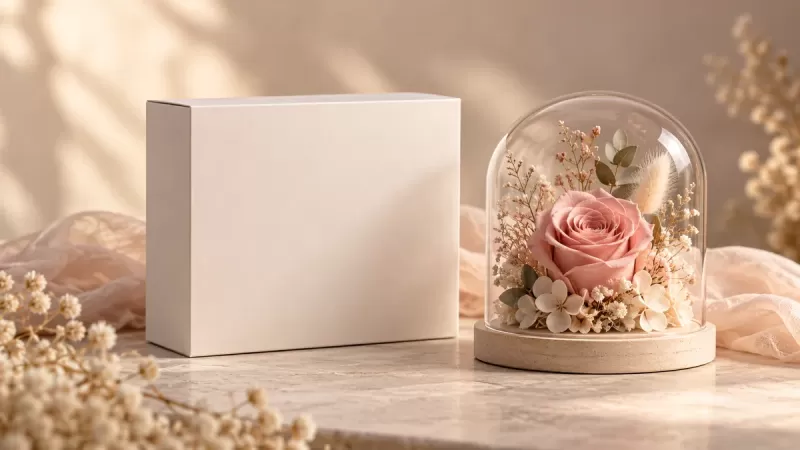
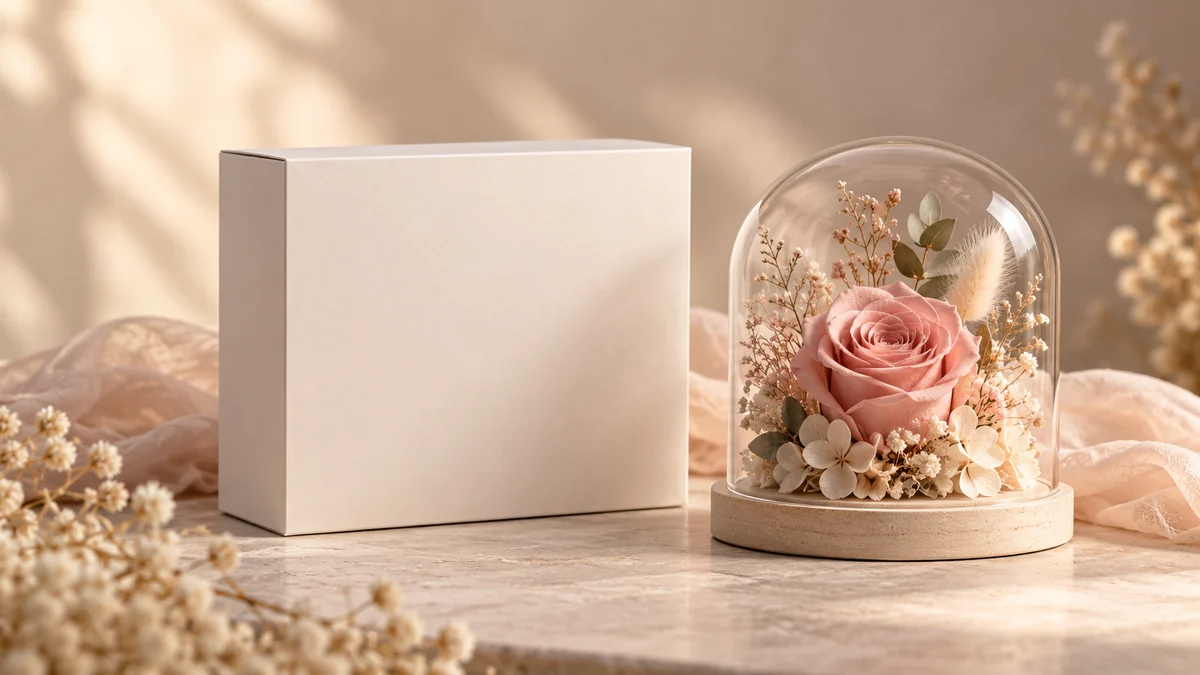
Check the current dimensions, color and included components of the specific arrangement. A compact display can sit at the far edge of a tabletop; a larger box may compete with a small subject. Do not assume the conceptual image above shows an available size or style. Browse the live preserved-flower collection or eternal-rose collection for current items, and compare their actual listing details with your frame. If the set calls for a very particular palette or footprint, ask about options through the current listing instead of making the image into an unsupported custom-order promise.
Think about what the prop will touch. Keep an arrangement stable on a dry, level surface, with room for the product and camera movement. Protect delicate surfaces or fabrics as appropriate for the real item. Florever's care page cautions that color can transfer from its preserved flowers, so do not press a display into a pale textile merely to obtain a close-up. Test the layout without the item first, then place it carefully and keep handling to a minimum.
3. Control light without treating the display as outdoor decor
Indoor photography does not require putting the flowers in harsh direct sun. A diffused window or controlled studio light may give you a readable product while reducing glare and heat on the prop. Amazon's guide describes a clean product-first background and notes that window light can sometimes be sufficient. Adjust the light for the product first; position the preserved arrangement away from hot equipment and direct sunlight according to its own care instructions. If a light source warms the display, increase its distance or use a different setup rather than assuming the flower tolerates it.
An outdoor campaign image needs a separate decision. Verdissimo's indoor-use guidance does not establish that a preserved arrangement is suited to a wet, windy or sunny location. A photographer can evoke an outdoor mood with backdrop color or another suitable prop indoors. If the project truly requires an outside set, use materials intended for that environment and leave an indoor floral keepsake off the set.
4. Compose one clean frame before a styled frame
Begin with the object alone, a neutral sweep or simple backdrop, and a crop that shows its important details. Take the photograph that a buyer could use to inspect what is for sale. Then add the floral prop only if it explains a genuine context, such as the scale of a tabletop gift or a calm indoor setting. Keep it to the side or behind the product. Avoid a flower color that makes the sold item's color look different from its actual appearance.
Use the same camera position and product placement for the comparison. A useful styled photograph can help tell a story; the primary product view still needs to remain legible. Check the image on a phone as well as a large monitor. Inspect the product edge, label, finish and any option shown. If the prop hides a variant detail or makes the product look like a bundle, remove it or revise the caption.
5. Separate styling from the offer
A flower arrangement used as a photography prop is not automatically part of the product offer. Say clearly in the image caption or adjacent product description when it is shown for styling only. Avoid copy such as “includes preserved rose” unless the live listing and fulfillment package truly include one. Do not imply that the illustrated display in this article is a FLOWEROF SKU. For an actual FLOWEROF flower purchase, the listing is the source for dimensions, options, price, availability and included components; this article is a planning guide.
If your own campaign sells preserved flowers, reverse the hierarchy: the flower item becomes the primary product and unrelated studio objects become props. Show a clean image that allows the shopper to inspect the real arrangement. A separate lifestyle frame can show a plausible indoor location without obscuring its shape or promising that another item is included. The distinction helps both a photographer and a shopper read the image accurately.
6. Handle, reset and store the arrangement carefully
Plan the shot list so the arrangement is moved as few times as possible. Set the camera, backdrop and product position first. Keep drinks, mist bottles and wet styling materials away from preserved flowers. Florever's guidance says not to water its preserved flowers; adding water for a “fresh flower” effect would be the wrong assumption. If the prop needs cleaning, follow the specific maker's care directions rather than improvising with a spray or solvent.
After the shoot, return the display to a dry indoor position away from prolonged direct sun and humidity. Do not leave it in a vehicle, by a damp window or on an outdoor set while the crew packs away equipment. Our separate preserved-flower care guide explains general care considerations; the exact item instructions still take priority.
7. Check the finished images for accuracy
Review the unstylized and styled frames side by side. The sold product should be identifiable in both. Check that the floral prop has not changed the apparent size, color, quantity or included items. Ask whether the flower is necessary for the intended channel: a campaign banner may have room for atmosphere, while a small collection thumbnail may need a simpler crop. Do not assume one composition works everywhere.
Before publishing your own product imagery, compare captions with the live offer and verify that any delivery statement matches the current delivery information and terms. Neither the photograph nor this article guarantees a shipment date or a particular item. If a floral gift is appropriate, select the live listing after checking its details, not from a conceptual editorial picture.
8. A short decision checklist
- Is the photography indoors on a dry, stable surface?
- Can a viewer identify the sold product immediately at mobile thumbnail size?
- Does the prop leave labels, options and important edges visible?
- Does the real arrangement's listing support its size, color and care needs?
- Does the caption state when flowers and accessories are styling only?
- Is there a clear product-only image as well as any styled frame?
If any answer is no, try a simpler background or remove the preserved-flower prop. A successful product photograph communicates the offer clearly. The flowers should earn their place by adding useful context while remaining within the maker's handling guidance.
Frequently asked questions
Can preserved flowers be used as a product photography prop?
They can be considered for a controlled indoor set if the actual item is suitable and the sold product remains clear. Start with a product-only frame, then test whether a small floral element adds context.
Should the rose be placed under a hot studio light?
Do not assume that heat is harmless. Follow the item's care instructions, avoid direct sun and position lights so they do not warm the display. Change the setup if the arrangement becomes hot.
Do preserved flowers need water to look good on camera?
No water should be added on that assumption. Florever's preserved-flower care says not to water its products. Use lighting and composition to improve the photograph without wetting the arrangement.
Can I take the same arrangement to an outdoor location shoot?
Do not treat an indoor preserved display as weatherproof. Verdissimo's FAQ describes its preserved products as intended for indoor use. Check the actual item instructions and choose outdoor-suitable styling materials when needed.
Is the box and rose in the featured image a FLOWEROF item?
No. The featured image is conceptual editorial art and does not show a specific SKU or included package. Check a live product listing for what can actually be ordered.
Leave a comment