Why buy from us?
Lorem Ipsum is simply dummy text of the printing and typesetting industry.
Ask a Question About This Product
Available Options
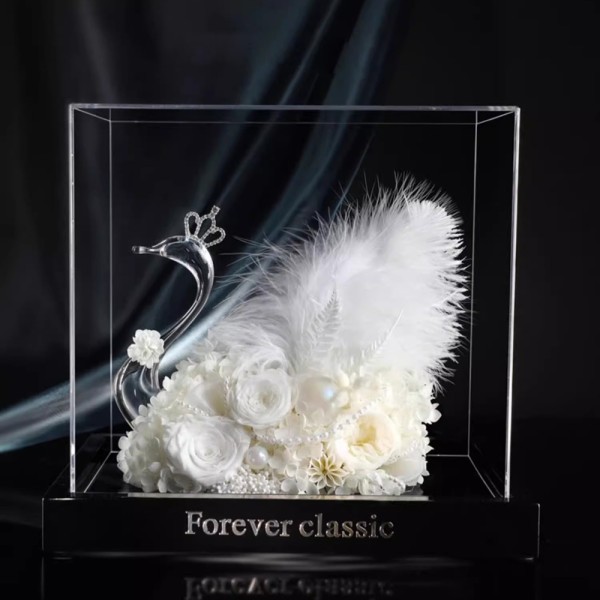
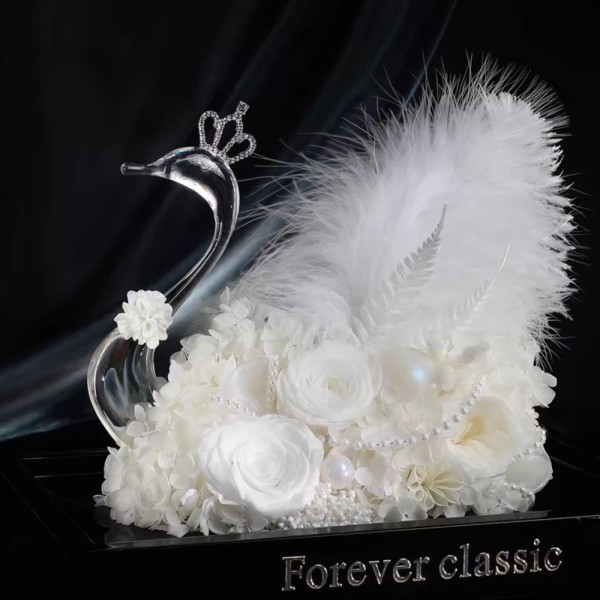
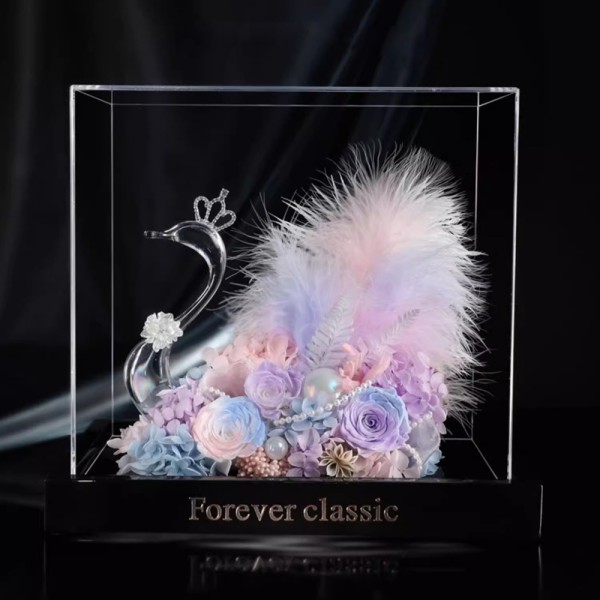
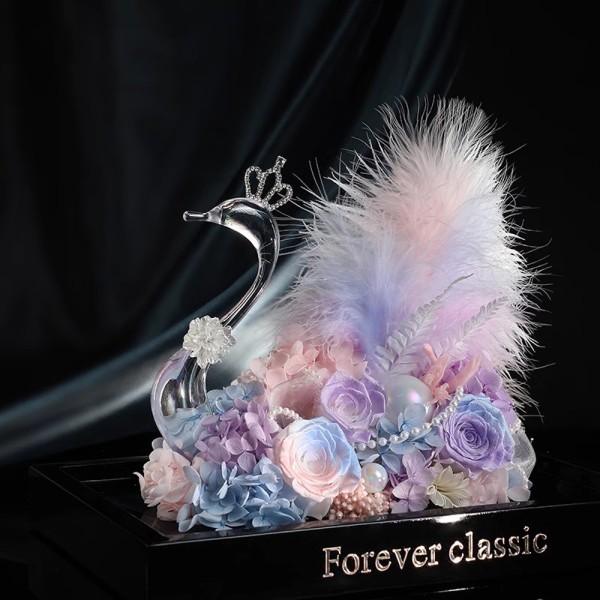
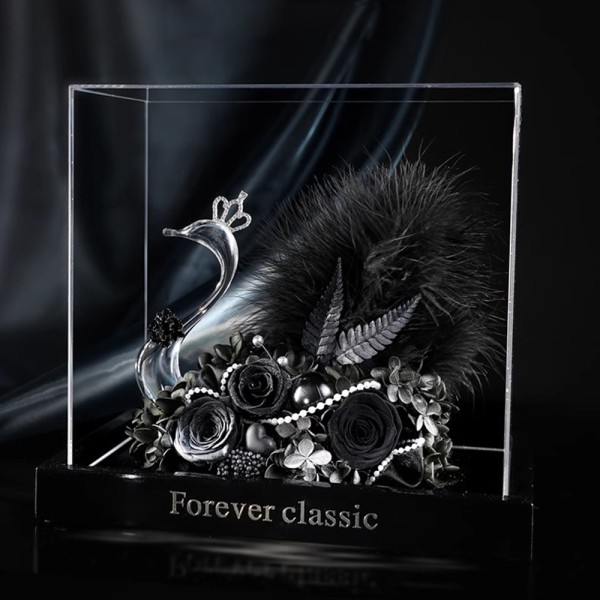
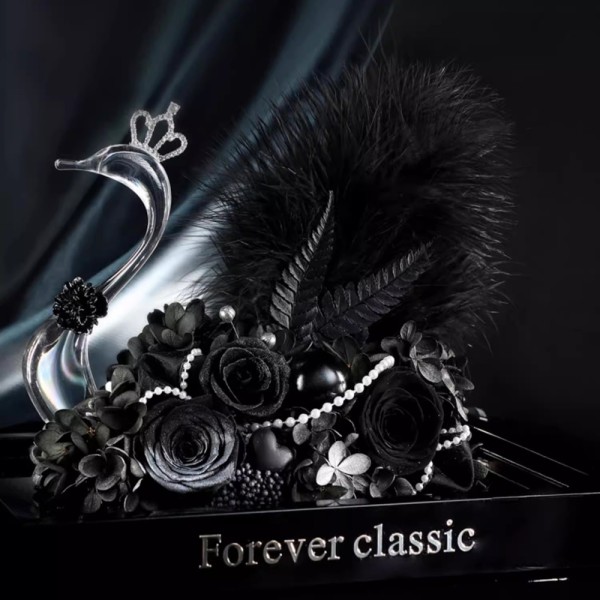
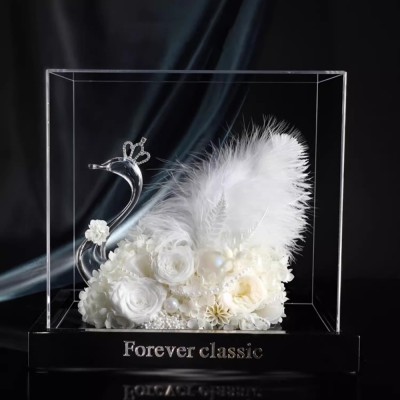
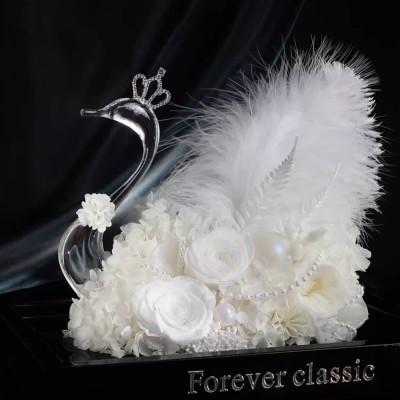
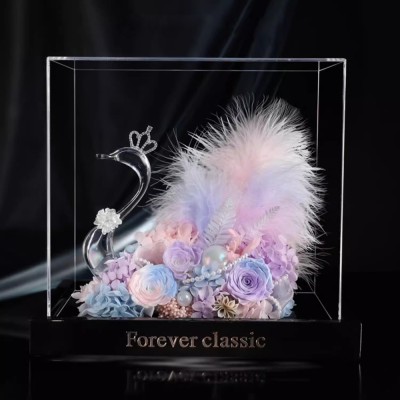
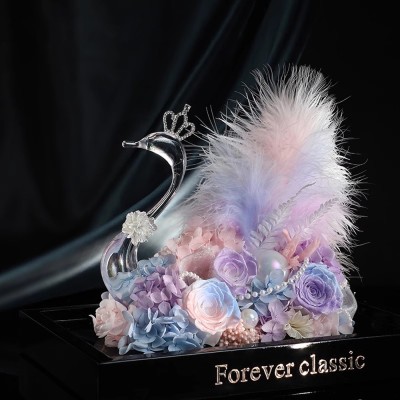
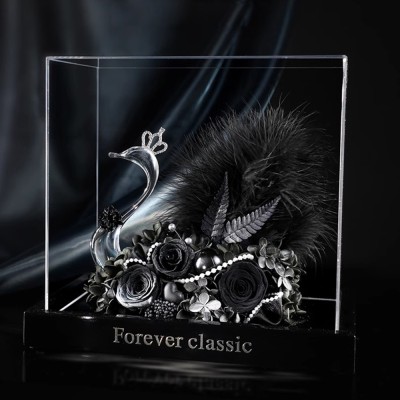
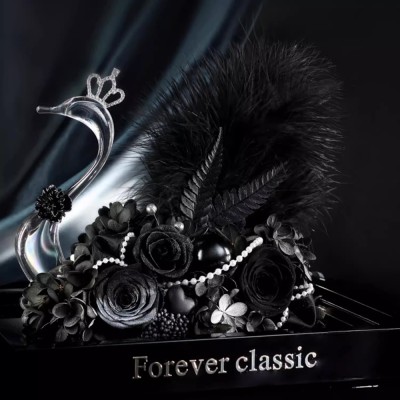
This preserved rose swan is a sculptural flower gift made with real preserved roses and presented inside a clear acrylic display box. Choose White Swan, Colorful Swan, or Black Swan from the Bouquet Style menu. The enclosed design keeps the arrangement easy to display and does not require watering.
Product details
- Flowers: Real preserved roses
- Design: Swan-shaped floral arrangement
- Display: Clear acrylic box for indoor use
- Styles: White Swan, Colorful Swan, and Black Swan
- Care: No water needed
Choose your swan style
White Swan has a clean, classic look. Colorful Swan adds mixed tones for a brighter display. Black Swan gives the arrangement a darker, more dramatic character. Select the style you want before adding the product to your cart.
Where it works as a gift
The rose swan can mark an anniversary, wedding, birthday, Mother's Day, housewarming, or another personal occasion. Its acrylic case also makes it suitable as a long-term decorative piece for a bedroom, living room, office, or gift table.
How to care for preserved roses
- Do not water the flowers.
- Keep the arrangement indoors and away from direct sunlight.
- Avoid humid rooms, heaters, and strong air-conditioning vents.
- Limit contact with the petals. Natural oils and pressure can affect their texture.
- Clean only the outside of the acrylic box with a soft, dry cloth.
Preserved roses are made for longer display than fresh-cut flowers, but their appearance and lifespan still depend on light, humidity, temperature, and handling. Read our preserved flower guide for more care information.
Before ordering
Because this arrangement uses real floral material, small differences in petal shape and tone are normal. Check the selected Bouquet Style before checkout. You can browse more eternal rose gifts if you prefer a bouquet or heart-shaped arrangement.
Questions
Are the roses real?
Yes. The arrangement uses real roses that have been preserved for indoor display.
Do the roses need water?
No. Water can damage preserved flowers, so keep the arrangement dry.
Can I choose the swan color?
Yes. The product options include White Swan, Colorful Swan, and Black Swan.
| Specification | |
| Size | 27cm*18cm*25cm |
| Material | Eternal Roses Swan Roses + Transparent Acrylic Dust Box |
| Brand | FLOWEROF |
| color | Preserved Roses in Various Colors |
| Applicable scenarios | Romantic confession & Birthday surprise & Love anniversary & Children's gift & Anniversary |
Builder in Product TAB
Frequently Asked Questions (FAQs) About Preserved Flowers
1. What are preserved flowers?
Preserved flowers, also known as "eternal flowers" or "never-wilt flowers," are real flowers that undergo a special preservation process. They are dehydrated, bleached, dyed, and dried to maintain their natural appearance, texture, and vibrancy for years. Unlike fresh flowers, they do not require water or sunlight and can last 3–5 years or longer under proper conditions.
2. How are preserved flowers made?
The production involves several steps:
Dehydration: Removing moisture from fresh flowers using a mixture of alcohol and methanol.
Bleaching: Eliminating natural pigments to prepare for dyeing.
Dyeing: Recoloring the flowers with eco-friendly dyes to achieve desired hues (even colors not found in nature, like blue roses).
Drying: Air-drying or using controlled environments to finalize the preservation.
3. What’s the difference between preserved flowers and dried flowers?
Preserved Flowers: Retain the softness, color, and shape of fresh flowers. Made through a complex chemical process.
Dried Flowers: Naturally air-dried, resulting in a brittle texture and faded colors. No chemical treatment is involved.
4. How long do preserved flowers last?
With proper care, preserved flowers can maintain their beauty for 3–5 years or longer. Factors like humidity, sunlight, and temperature significantly affect their lifespan.
5. How to care for preserved flowers?
Avoid moisture: Keep them in a dry environment (humidity below 60%).
No direct sunlight: Prolonged exposure causes fading.
Gentle cleaning: Use a soft brush or cool-air blow dryer to remove dust.
No water: Never water them, as it damages the preservation.
6. Why are preserved flowers expensive?
Labor-intensive process: Each flower is handpicked at peak bloom and undergoes meticulous treatment.
High-quality materials: Only flawless flowers are selected, and specialized dyes/chemicals are used.
Longevity: Their extended lifespan justifies the higher cost compared to fresh flowers.
7. Are preserved flowers eco-friendly?
While they reduce waste by lasting years, the production involves chemicals like methanol and synthetic dyes. Some brands use eco-friendly dyes, but sustainability varies by manufacturer.
8. Can I DIY preserved flowers?
Yes! DIY kits with preservation solutions (e.g., silica gel or glycerin) are available. However, professional-grade results require precise control of humidity and dyeing techniques.
9. What occasions are preserved flowers suitable for?
Romantic gifts: Symbolize eternal love (e.g., red roses for anniversaries).
Home décor: Perfect for long-lasting centerpieces or wall art.
Weddings: Bouquets and boutonnieres that won’t wilt.
Memorials: A lasting tribute for funerals or remembrance.
10. Do preserved flowers trigger allergies?
No! Pollen is removed during processing, making them safe for allergy sufferers.
11. What colors and types are available?
Preserved flowers come in endless colors, including unnatural shades (e.g., metallic gold or pastel gradients). Popular varieties include roses, hydrangeas, carnations, and eucalyptus.
12. Which brands are recommended?
Roseamor (Ecuador): Known for large, velvety roses.
Earth Matters (Japan): Offers diverse colors and accessories.
Verdissimo (Colombia): Specializes in vibrant, long-lasting blooms.
13. Can preserved flowers be repaired if damaged?
Minor issues (e.g., dust or slight dampness) can be fixed with a blow dryer or gentle brushing. Severe mold or breakage usually requires professional restoration or replacement.